
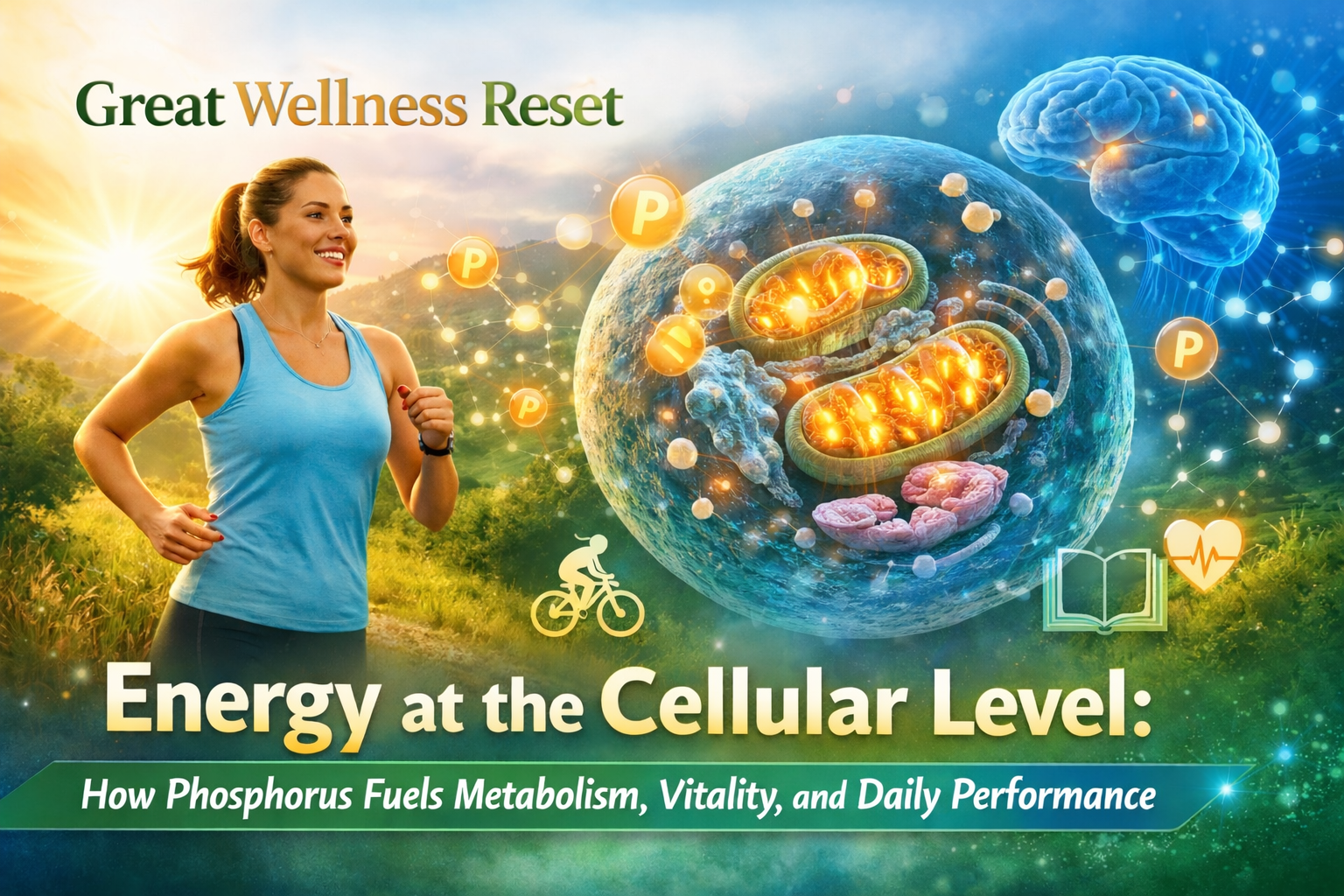
Energy at the Cellular Level: Phosphorus Fuels Metabolism and Daily Performance
Fatigue has quietly become one of the most common experiences in modern life. People are sleeping more but still waking up tired. They’re drinking more coffee but hitting an afternoon crash. They’re pushing harder at work, in workouts, and at home, yet feeling like their energy reserves never quite refill. It’s easy to assume the problem is motivation, stress, or simply getting older. But often the issue isn’t effort. It’s efficiency.
Energy is not just something you feel—it’s something your body produces. And how well your body converts nutrients into usable energy determines how steady, resilient, and sustainable that energy feels throughout the day. At the center of that process is a mineral that rarely gets attention in conversations about vitality: phosphorus.
Phosphorus is not an “energy booster” in the stimulant sense. It doesn’t create a surge, a buzz, or a spike. Instead, it supports the biological systems that generate energy at the cellular level. Without phosphorus, the body cannot produce or recycle energy efficiently. That makes it one of the most foundational—yet overlooked—nutrients for metabolism, endurance, and daily performance.
To understand why phosphorus matters so much, we have to start where energy truly begins: inside the cell.
Energy Begins Inside the Cell
ATP: The Body’s Energy Currency
Every single cell in your body requires energy to function. Muscle cells need energy to contract. Brain cells need energy to transmit signals. Liver cells need energy to process nutrients. Even resting cells are actively maintaining balance, repairing structures, and regulating internal systems. None of this happens passively. It all requires fuel.
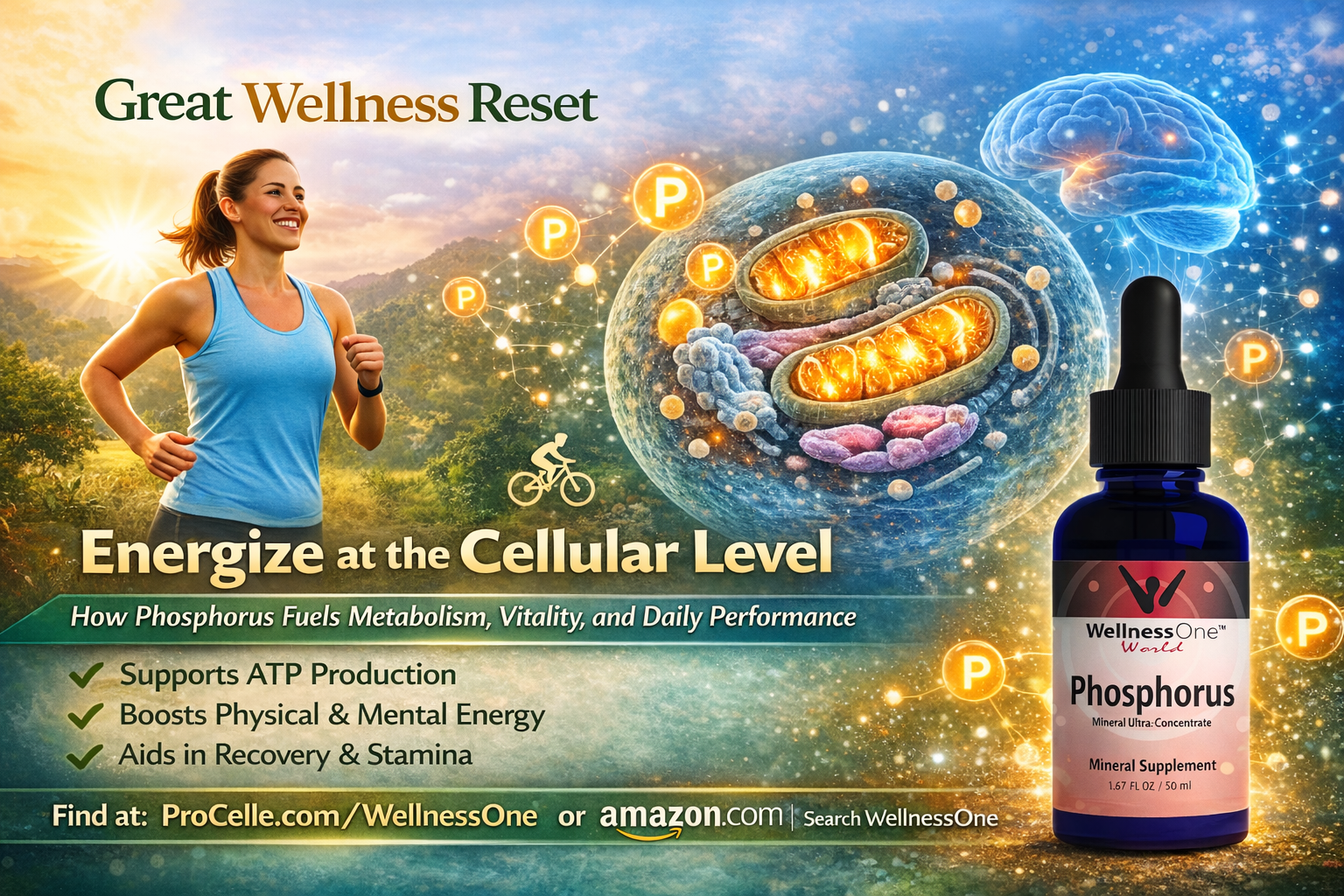
That fuel comes in the form of ATP, or adenosine triphosphate. ATP is often described as the body’s “energy currency.” It stores energy and releases it wherever work needs to be done. When ATP breaks down, it releases energy that powers cellular activity. When it’s rebuilt, energy potential is restored.
Here’s the part many people don’t realize: ATP contains three phosphate groups. Phosphorus is literally built into the structure of the molecule that delivers energy throughout your body. Every time ATP is formed, phosphorus is required. Every time ATP is recycled, phosphorus is involved again.
Energy is not created in large batches and stored for later. It is produced moment by moment, cell by cell, through the continuous formation and regeneration of ATP. If phosphorus availability is limited, that process becomes less efficient. The body may still function, but it may require more effort to achieve the same output. Over time, that inefficiency can feel like persistent fatigue.
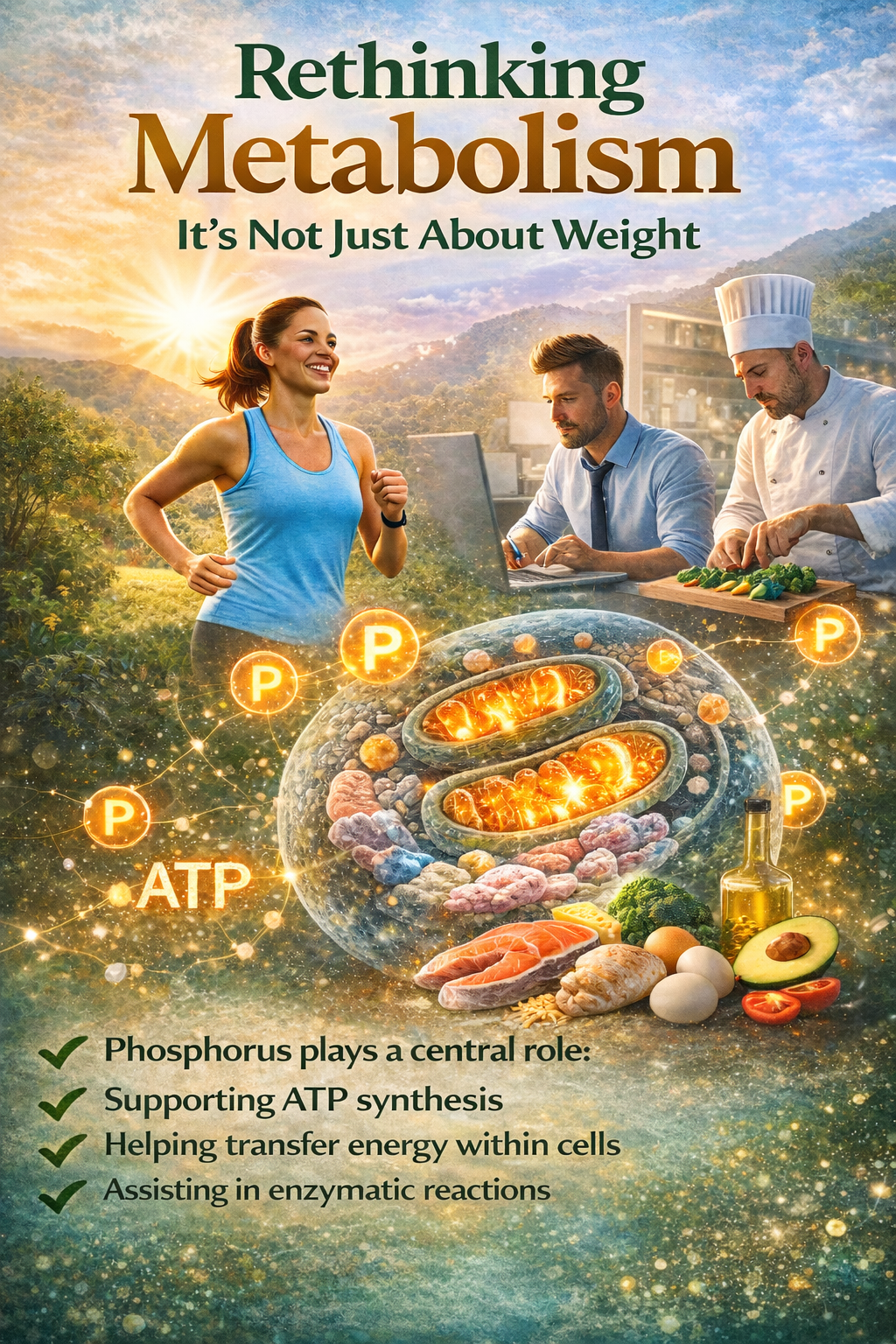
Rethinking Metabolism
It’s Not Just About Weight
When people talk about “metabolism,” they often mean how fast they burn calories. But metabolism is much broader than weight management. Metabolism is the sum of all chemical reactions that convert nutrients into energy and usable components for growth and repair. It’s how food becomes function.
Phosphorus plays a central role in this conversion process. It supports ATP synthesis, helps transfer energy within cells, and assists in regulating enzymatic reactions that drive metabolic pathways. When phosphorus levels are sufficient and balanced, these processes tend to operate more smoothly. When they’re not, energy production can slow subtly but meaningfully.
This kind of slowdown doesn’t necessarily look dramatic. It can show up as needing more caffeine than you used to. It can feel like reduced stamina during exercise or slower recovery afterward. It can appear as mental fog in the afternoon or a sense that your resilience isn’t what it once was. These signs are often attributed solely to stress or aging, but cellular energy availability is frequently part of the story.
The Role of Mitochondria
Your Internal Power Plants
Deep inside each cell are structures called mitochondria. They’re often referred to as the “power plants” of the cell because they are responsible for producing ATP. Mitochondria take nutrients from carbohydrates, fats, and proteins and convert them into usable energy through a series of complex biochemical reactions.
Phosphorus is required throughout this process. Without adequate phosphorus, ATP production inside the mitochondria can become less efficient. That doesn’t mean the mitochondria stop working, but it can mean they struggle to keep up when demand increases.
When you exercise, think intensely, or experience stress, your energy requirements rise. If the cellular machinery isn’t fully supported, fatigue can set in sooner than expected. Over time, that may look like earlier energy dips, less stamina, and longer recovery periods.
Supporting phosphorus helps reinforce the very machinery that produces energy in the first place.
Why Stimulants Don’t Fix the Root Problem
Boosting vs. Building Energy
Caffeine and sugar can temporarily increase alertness or provide quick fuel, but they do not enhance ATP production itself. They don’t improve mitochondrial efficiency. Instead, they often mask fatigue signals, allowing you to push through without necessarily supporting the systems that create energy in the first place.
True, sustainable energy feels different from stimulation. It doesn’t spike and crash. It doesn’t depend on timing your caffeine intake perfectly. It feels steady, consistent, and more resilient to daily demands.
Supporting phosphorus is about building energy capacity rather than artificially boosting output. When the internal system works well, the need for external stimulation often decreases.
Phosphorus and Physical Endurance
Energy for Movement and Recovery
During movement, muscles use ATP rapidly. The more intense or prolonged the activity, the more ATP is required. But ATP stores inside muscle cells are limited, which means the body must continuously regenerate it. Phosphorus is essential to this recycling process.
If ATP regeneration can’t keep pace with demand, muscles fatigue more quickly. Recovery after activity may take longer. Even everyday tasks—carrying groceries, climbing stairs, standing for extended periods—can feel more draining.
Supporting phosphorus helps maintain the cycle of ATP breakdown and rebuilding. That directly influences endurance, recovery, and overall physical resilience. Endurance is not just about strength; it’s about energy availability.
Mental Energy and Focus
The Brain’s High Energy Demand
The brain is one of the most energy-demanding organs in the body. Even though it represents only a small percentage of total body weight, it consumes a significant share of daily energy production. Every thought, every memory retrieval, every moment of focus requires ATP.
Phosphorus contributes to ATP production in brain cells and supports nerve signaling and cellular structure. When energy production is efficient, cognitive performance tends to feel clearer and more stable.
While phosphorus is not a stimulant and doesn’t artificially enhance alertness, it supports the underlying conditions that allow the brain to function optimally. Mental stamina, like physical stamina, depends on cellular energy.
Cellular Fatigue vs. Lifestyle Fatigue
Understanding the Difference
Lifestyle fatigue is easy to recognize. You stayed up too late. You traveled. You had a particularly stressful week. Rest and recovery typically restore balance.
Cellular fatigue is more subtle. It can show up as waking up tired even after adequate sleep. It may feel like your baseline energy has shifted downward. You might rely heavily on stimulants just to feel normal. Recovery from routine tasks might seem slower than it used to be.
These patterns suggest that energy production at the cellular level may not be as efficient as it once was. Addressing cellular fatigue requires supporting the systems that generate ATP. Phosphorus is central to that process.
Absorption and Bioavailability
Why Form Matters
Even if dietary intake appears sufficient, digestive efficiency, stress, and mineral balance can influence how much phosphorus the body actually utilizes. The form in which a mineral is delivered can affect how readily it is absorbed and incorporated into cellular processes.
Liquid minerals are already in an ionized state, which can make them easier for the body to recognize and absorb without extensive digestive breakdown. WellnessOne Phosphorus is delivered in a liquid form designed to support consistent absorption, helping ensure that the mineral is available for the processes that depend on it.
When it comes to energy support, absorption is just as important as intake.
Phosphorus in Mineral Balance
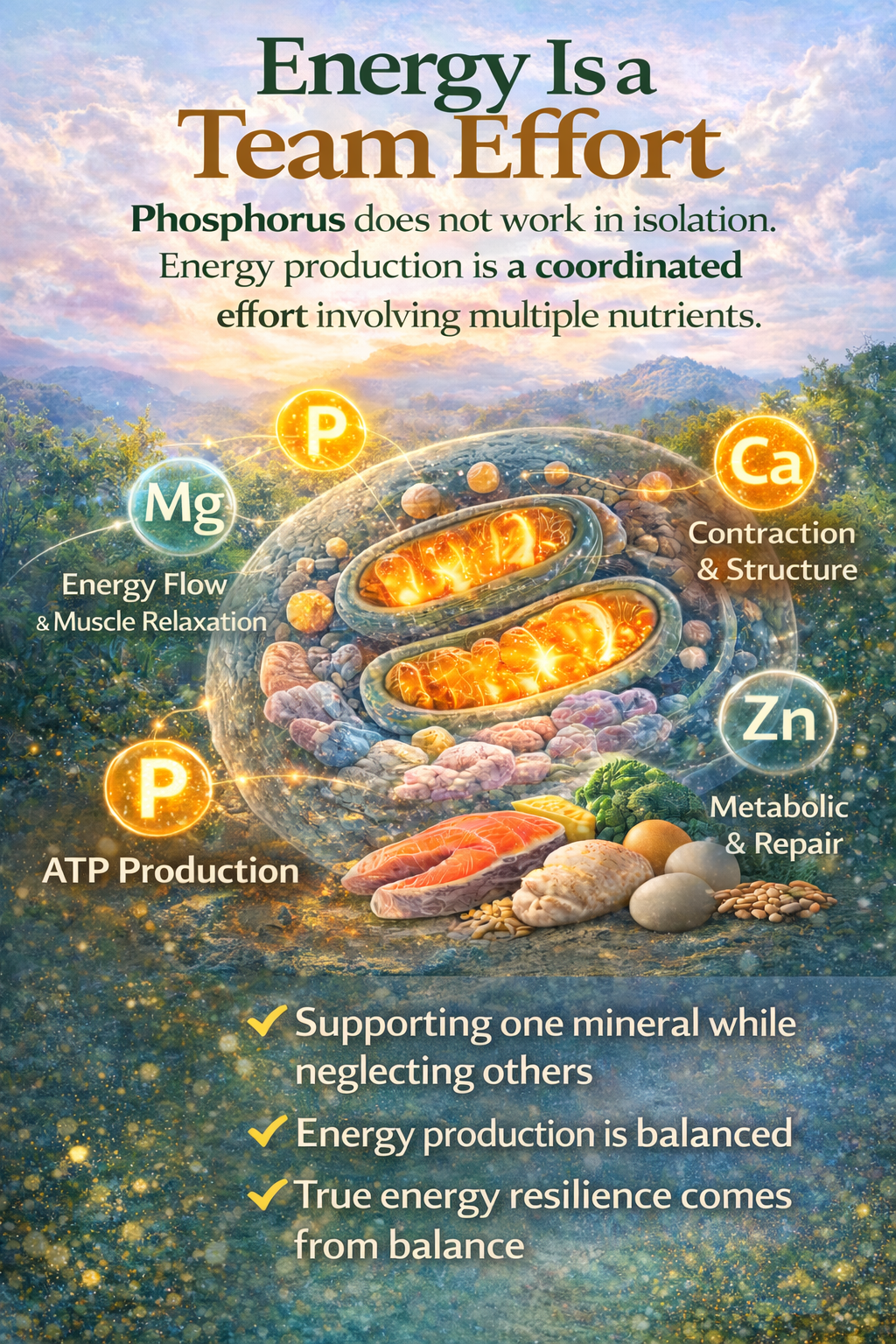
Energy Is a Team Effort
Phosphorus does not work in isolation. Energy production is a coordinated effort involving multiple nutrients. Magnesium supports energy flow and muscle relaxation. Calcium supports contraction and structural integrity. Zinc contributes to metabolic and repair processes.
Supporting one mineral while neglecting others may limit overall results. True energy resilience comes from balance.
Sustainable Energy Is Built, Not Forced
True vitality isn’t about pushing harder. It’s about creating internal conditions that allow the body to generate energy naturally and consistently.
Phosphorus plays a quiet but essential role in this foundation. By supporting ATP production, mitochondrial efficiency, and metabolic conversion, it helps create energy that feels stable rather than stimulated.
If you’ve been chasing energy through caffeine, sugar, or sheer willpower, it may be time to shift the focus inward. Instead of asking how to boost energy quickly, consider how to support energy production consistently. Evaluate sleep, hydration, mineral balance, and absorption. Think long term rather than short term.
Energy doesn’t begin with motivation. It doesn’t begin with effort. It begins inside the cell. And when the cellular machinery is supported, vitality becomes less about pushing through and more about moving forward with steady, sustainable strength.
Keep the current article but ad some refernences
References
- Nelson DL, Cox MM. Lehninger Principles of Biochemistry. 7th ed. W.H. Freeman; 2017.
- Berg JM, Tymoczko JL, Gatto GJ, Stryer L. Biochemistry. 8th ed. W.H. Freeman; 2015.
- Institute of Medicine (US). Dietary Reference Intakes for Calcium and Vitamin D. National Academies Press; 2011. (Includes phosphorus metabolism and regulation.)
- Geerse DA, Bindels AJGH, Kuiper MA, Roos AN, Spronk PE, Schultz MJ. Treatment of hypophosphatemia in the intensive care unit: a review. Crit Care. 2010;14(4):R147.
- Amanzadeh J, Reilly RF. Hypophosphatemia: an evidence-based approach to its clinical consequences and management. Nat Clin Pract Nephrol. 2006;2(3):136–148.
- Kemp GJ. Non-invasive methods for studying brain energy metabolism: what they show and what it means. Dev Neurosci. 2000;22(5–6):418–428.
- Fredholm BB, et al. Actions of caffeine in the brain with special reference to factors that contribute to its widespread use. Pharmacol Rev. 1999;51(1):83–133.
- Kreider RB, et al. Effects of phosphate loading on oxygen uptake, ventilatory threshold, and exercise performance. Med Sci Sports Exerc. 1992;24(6): 719–725.
- Cade R, et al. Effects of phosphate loading on 2,3-diphosphoglycerate and maximal oxygen uptake. Med Sci Sports Exerc. 1984;16(3):263–268.
- Harris JJ, Jolivet R, Attwell D. Synaptic energy use and supply. Neuron. 2012;75(5):762–777.