

Screen Time Is Now Considered a Major Health Factor
Screens have quietly become one of the most influential parts of modern life—especially for children and teenagers. From smartphones and tablets to streaming and gaming, digital devices now shape how kids learn, socialize, and relax. But growing research is raising an important question: how much screen time is too much?
Health experts are beginning to view screen exposure as a major lifestyle factor, much like sleep, nutrition, and physical activity. Studies now suggest that excessive screen time can affect sleep quality, physical movement, and even mental well-being in children.
In this article, we explore what the latest research says about screen time, why balance matters, and how families can help children develop healthier digital habits—while encouraging more outdoor activity, real-world connection, and community engagement.
Why Families Are Rethinking the Digital Balance
In the past decade, screens have quietly become one of the most powerful influences on daily health. Smartphones, tablets, computers, gaming systems, and streaming platforms have transformed how people work, learn, and relax. For children and teenagers especially, screens now shape how they socialize, play, and even how they sleep.
Researchers and pediatric health organizations are increasingly treating screen exposure not just as a lifestyle issue, but as a major health factor—similar to diet, sleep, and physical activity.
Recent research and pediatric guidelines suggest that the amount of time children spend on screens can influence sleep quality, mental health, physical development, and overall wellbeing. As families become more aware of these connections, many are looking for ways to rebalance digital life with real-world experiences.
This article explores what the research shows about screen time, why it matters, and how families and communities can help children develop healthier digital habits.
The Growing Role of Screens in Daily Life
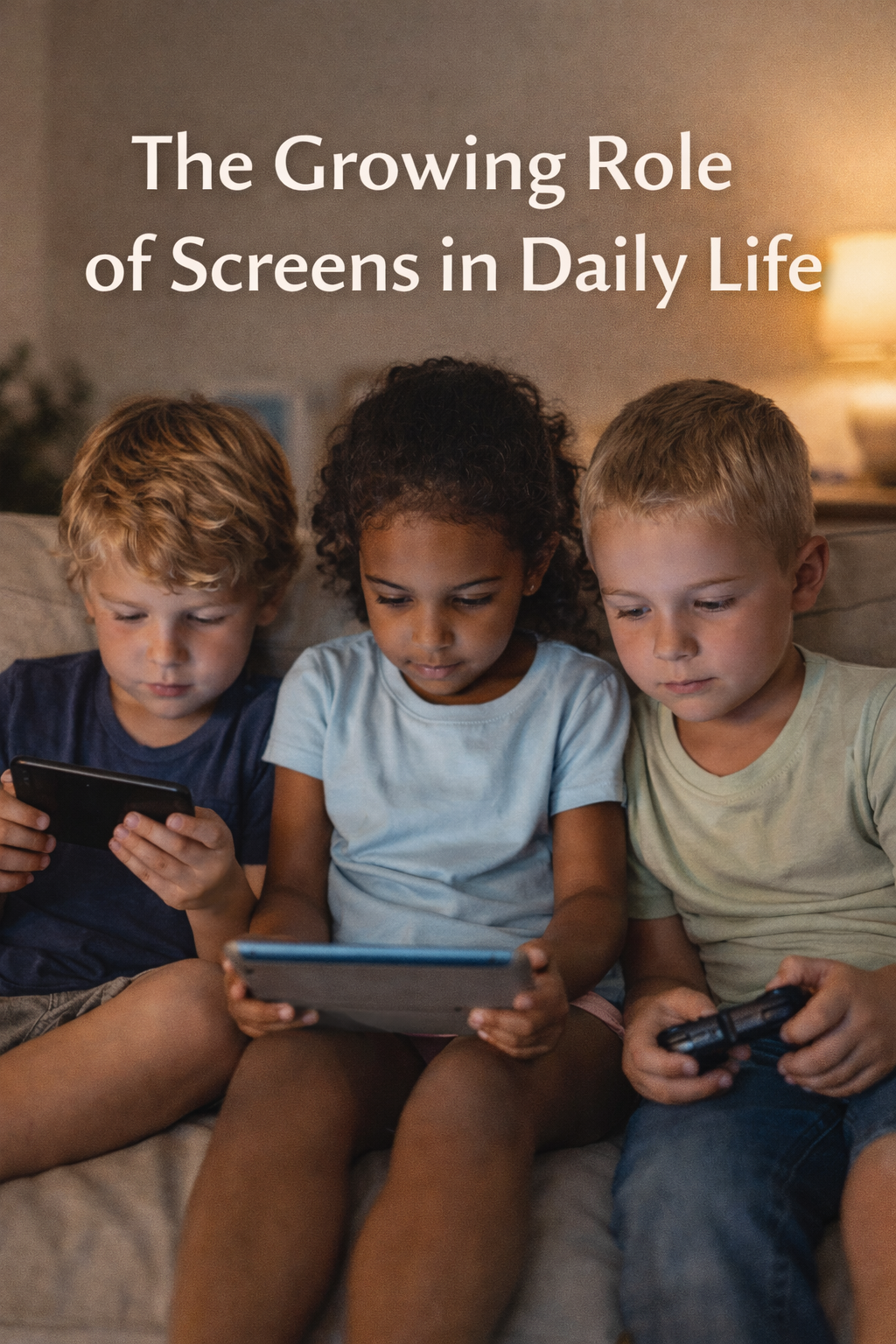
Today’s children are growing up in what many researchers describe as the first fully digital childhood. Screens are no longer occasional entertainment devices. They are integrated into education, communication, recreation, and even social identity.
Children may use screens for school assignments, educational videos, gaming with friends, social media interaction, and streaming entertainment. For many families, screens also serve as a practical tool to occupy children during busy schedules.
While technology provides many benefits, the challenge arises when screen use replaces other essential activities—especially sleep, physical movement, social interaction, and outdoor play.
Health experts are now asking an important question:
What happens when digital time starts to crowd out the experiences that help children develop physically, emotionally, and socially?
B
What the Research Shows
Research in recent years has examined the connection between screen exposure and multiple areas of health.
A 2023 review by the American Academy of Pediatrics found that excessive screen time in children is associated with several concerning trends, including:
- decreased physical activity
- poorer sleep quality
- increased anxiety and depression symptoms
These patterns do not mean screens are inherently harmful. Instead, the concern arises when screen use becomes excessive or replaces healthier activities.
Many studies suggest that heavy screen use may influence children in several ways.
First, prolonged screen use can reduce time spent moving the body. Children who spend many hours sitting with devices often have fewer opportunities for physical play, sports, or outdoor exploration.
Second, screens—especially those used late in the evening—can interfere with sleep cycles. The blue light emitted by digital devices may disrupt the body’s natural sleep signals, making it harder for children to fall asleep.
Third, digital environments sometimes expose children to social comparison, online conflict, or overstimulation, which can contribute to emotional stress.
Researchers emphasize that these effects are often dose-dependent. Occasional use or structured educational use generally shows fewer negative associations than long periods of passive entertainment.

Screen Time Guidelines for Children
To help families navigate digital exposure, pediatric experts have developed general guidelines for recreational screen use.
Current recommendations suggest:
Children under five years old should generally have less than one hour per day of recreational screen time.
School-age children are encouraged to limit recreational screen use to two hours per day or less.
It is important to note that these recommendations primarily focus on entertainment screens, not educational activities required for school.
Educational screen use—such as research, virtual learning, or creative projects—is often considered less problematic than passive consumption like endless scrolling or streaming.
However, even educational screen time benefits from balance. Children still need real-world experiences to develop social skills, creativity, and physical coordination.
Why Screen Time Affects Sleep
Sleep is one of the most consistent areas where researchers see the impact of excessive screen use.
Many children now bring devices into the bedroom. Phones, tablets, and gaming systems often extend screen time late into the evening.
There are several reasons this can affect sleep.
Digital devices stimulate the brain. Fast-moving visuals, interactive games, and social notifications keep the brain in a state of alertness.
Screens also emit blue light, which can interfere with melatonin production. Melatonin is the hormone that helps signal to the body that it is time to sleep.
When melatonin production is delayed, children may fall asleep later, sleep fewer hours, or experience poorer sleep quality.
Sleep disruption can affect many aspects of health, including mood, concentration, immune function, and academic performance.
For this reason, many pediatricians recommend screen-free time at least one hour before bedtime.
The Importance of Physical Activity
Children are naturally wired for movement. Running, climbing, biking, and exploring are not just forms of play—they are essential parts of physical development.
When screen time replaces physical activity, several issues can arise.
Children may develop weaker muscles and lower cardiovascular fitness. They may also miss opportunities to develop coordination, balance, and motor skills.
Outdoor play also provides exposure to sunlight, which helps regulate circadian rhythms and supports vitamin D production.
Perhaps just as important, active play helps children manage stress and develop confidence.
Sports, games, and physical exploration encourage teamwork, resilience, and problem solving—skills that are difficult to develop through digital environments alone.

Mental Health and Digital Overload
Another growing area of concern involves the relationship between screen use and emotional wellbeing.
Social media, gaming platforms, and constant digital notifications can create a sense of pressure to remain connected at all times.
For teenagers especially, online interactions sometimes involve social comparison or negative feedback, which can contribute to feelings of anxiety.
Research has found associations between heavy screen use and higher levels of depression symptoms and anxiety, particularly among adolescents who spend many hours on social platforms.
However, context matters. Positive digital interactions, creative projects, and communication with friends can be beneficial.
The key factor is balance—ensuring that screen use supports life rather than dominating it.
Building Healthy Screen Habits at Home
Families do not need to eliminate screens to protect children’s health. Instead, experts recommend creating intentional boundaries and routines that promote balance.
One of the most effective strategies is setting clear screen limits that the entire family follows consistently.
Parents can designate specific times when screens are allowed and times when they are not. Many families find success with screen-free zones, such as bedrooms or the dinner table.
Another helpful approach is modeling behavior. Children often imitate adult habits. When parents also limit device use and engage in active or social activities, children are more likely to follow.
Family activities that do not involve screens—such as cooking together, playing board games, or taking evening walks—can gradually shift habits toward healthier patterns.

The Power of Outdoor Activities
Outdoor play remains one of the most effective ways to reduce screen dependence.
Nature offers a powerful alternative to digital entertainment. Parks, trails, playgrounds, and open fields encourage imagination and exploration in ways screens cannot replicate.
Outdoor activities stimulate multiple senses at once. Children interact with textures, sounds, sunlight, and movement, which helps support cognitive development.
Simple outdoor experiences can include:
- bike rides
- nature walks
- playing catch
- building forts
- gardening
- exploring local parks
Outdoor play also encourages social interaction. Children often form friendships more naturally when playing together outside.
Even small amounts of daily outdoor time can make a noticeable difference in mood and energy levels.
Community and Neighborhood Solutions
Families are not alone in addressing screen overuse. Communities can play a major role in encouraging healthier habits.
Neighborhood events can provide structured opportunities for children to gather, play, and socialize outside.
Many communities have begun organizing activities designed specifically to encourage outdoor engagement.
Examples include neighborhood kickball games, evening bike rides, community scavenger hunts, and outdoor movie nights in local parks.
Block parties and seasonal festivals can also help reconnect families with their neighbors.
When children see their friends playing outside, they are more likely to put devices down and join in.
Schools and community organizations can support these efforts by hosting outdoor events, sports leagues, and after-school programs that prioritize physical activity.

Safety Considerations for Outdoor Play
Encouraging children to spend time outside also requires thoughtful attention to safety.
Parents often feel more comfortable allowing outdoor play when neighborhoods provide safe environments for children.
Community awareness plays an important role. Neighbors who know one another are more likely to watch out for local children and create a supportive atmosphere.
Basic safety practices include teaching children traffic awareness, helping them understand boundaries for where they can play, and ensuring younger children are supervised appropriately.
Communities can also improve outdoor safety through well-maintained parks, safe walking paths, and neighborhood watch programs.
When families feel confident that outdoor environments are safe, children naturally gain more freedom to explore.

Creating a Healthy Digital Balance
Screens are likely to remain a permanent part of modern life. Technology brings valuable opportunities for education, creativity, and communication.
The challenge is not eliminating screens but creating balance.
Children benefit most when their daily routines include a mix of activities: learning, social interaction, physical movement, creativity, and rest.
Healthy routines might include schoolwork, outdoor play, family time, hobbies, reading, and limited recreational screen use.
When families focus on adding positive activities rather than simply removing screens, children are more likely to adapt successfully.
Balance allows technology to remain a useful tool without overwhelming other important aspects of life.
Looking Ahead
As research continues, health experts increasingly recognize screen time as an important lifestyle factor.
Just like nutrition and sleep, digital habits shape long-term wellbeing.
Families who create thoughtful boundaries around screen use can help children build healthier relationships with technology.
Encouraging outdoor play, community engagement, and active hobbies gives children alternatives that support both physical and emotional development.
By making small adjustments today, families can help ensure that the next generation grows up with the skills and experiences needed to thrive in both the digital and real world.
References
American Academy of Pediatrics. (2023). Children, Adolescents, and Digital Media: Policy Statement. Pediatrics Journal.
Hale, L., & Guan, S. (2015). Screen Time and Sleep Among School-Aged Children and Adolescents. Sleep Medicine Reviews.
Twenge, J. M., & Campbell, W. K. (2018). Associations Between Screen Time and Lower Psychological Well-Being Among Children and Adolescents. Preventive Medicine Reports.
World Health Organization. (2019). Guidelines on Physical Activity, Sedentary Behaviour, and Sleep for Children Under 5 Years of Age.
Common Sense Media. (2022). The Common Sense Census: Media Use by Kids Age 8–18.