
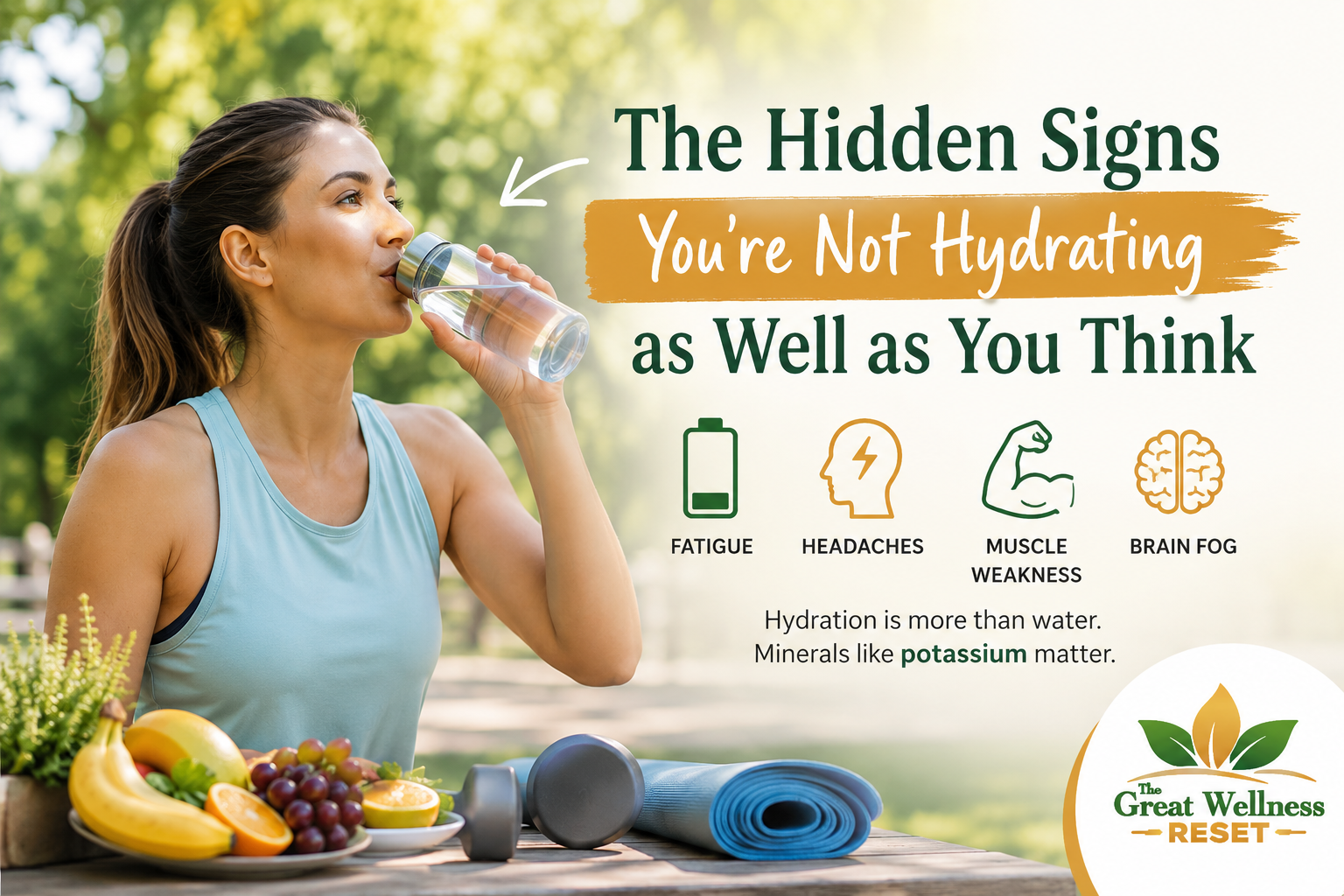
Hydration Is About More Than Drinking Water
Most people believe they know when they’re dehydrated. They imagine extreme thirst, dry lips, or feeling overheated after spending time outside. But dehydration often begins long before those obvious symptoms appear.
In fact, many people walk around mildly dehydrated every day without realizing it. They drink water regularly, carry reusable water bottles, and make a conscious effort to stay hydrated. Yet they still experience fatigue, headaches, muscle weakness, and brain fog. The reason is simple: proper hydration involves much more than water alone.
Hydration is a complex process that depends on fluid balance, electrolytes, mineral status, sleep quality, activity levels, and even seasonal changes. As temperatures rise during late spring and summer, the body’s hydration needs increase. At the same time, longer daylight hours and shifts in circadian rhythm can place additional demands on energy production and recovery.
If you’ve been feeling unusually tired, mentally sluggish, or physically drained despite drinking plenty of water, your body may be sending signals that hydration isn’t happening as efficiently as you think.
Let’s explore the hidden signs of poor hydration and what you can do to support your body’s natural energy systems.
Why Water Alone Isn’t Always Enough
Water is essential for life. Every cell, tissue, and organ depends on it. However, water alone does not determine hydration status.
For water to move into cells and remain where it is needed, the body relies on electrolytes. These minerals help regulate fluid balance, nerve communication, muscle contractions, blood pressure, and cellular energy production.
When electrolyte levels become imbalanced, you can drink plenty of water yet still experience symptoms commonly associated with dehydration.
This is especially common during seasonal transitions. As temperatures increase, the body loses more fluids through perspiration. Even modest increases in outdoor activity can accelerate mineral losses. Many people replace the lost fluid but fail to replace the minerals that help the body utilize that fluid effectively.
The result is a subtle form of dehydration that often goes unnoticed.
Persistent Fatigue May Be a Hydration Problem
One of the earliest and most overlooked signs of inadequate hydration is fatigue.
When fluid levels begin to decline, blood volume decreases slightly. This forces the cardiovascular system to work harder to deliver oxygen and nutrients throughout the body. Even mild dehydration can make everyday activities feel more exhausting.
Research has shown that fluid losses as small as one to two percent of body weight can negatively affect physical performance and energy levels. What makes this challenging is that many people never feel significantly thirsty during this stage.
Instead, they simply notice that they are dragging through the day. They rely on caffeine to stay alert or assume stress is the cause of their low energy.
Seasonal changes can amplify this effect. Longer days often lead to increased activity, more time outdoors, and subtle disruptions in sleep schedules. Combined with inadequate hydration, these factors can create the perfect environment for chronic fatigue.
The Connection Between Brain Fog and Hydration
Have you ever walked into a room and forgotten why you went there? Found yourself rereading the same sentence multiple times? Struggled to focus on simple tasks?
Brain fog is one of the most common complaints associated with mild dehydration.
The brain is approximately 75 percent water. It relies on proper hydration to support circulation, oxygen delivery, and communication between nerve cells. When hydration levels decline, cognitive performance often declines as well.
Studies have demonstrated that even mild dehydration can impair concentration, memory, mood, and mental processing speed. Many people interpret these symptoms as signs of aging, stress, or lack of sleep when hydration may be playing a significant role.
During late spring and early summer, increased daylight can alter circadian rhythms and sleep quality. Poor sleep combined with inadequate hydration often creates a cycle of mental fatigue that becomes increasingly difficult to break.
Frequent Headaches Could Be a Warning Sign
Headaches are another common indicator that hydration may not be optimal.
When the body lacks sufficient fluids, blood vessels can temporarily constrict and circulation may become less efficient. Changes in fluid balance can also affect pressure within the tissues surrounding the brain.
The result can be a dull, persistent headache that appears without an obvious cause.
Many people automatically reach for pain relievers when a headache develops. However, hydration should always be considered first. If headaches frequently improve after consuming fluids and replenishing electrolytes, dehydration may be contributing to the problem.
Recurring headaches are often one of the body’s earliest warning signs that fluid and mineral balance need attention.
Muscle Weakness and Poor Recovery
Hydration affects every muscle in the body.
Muscle cells rely on water and electrolytes to generate contractions and maintain strength. When hydration status declines, muscles become less efficient and more prone to fatigue.
You may notice your workouts feel harder than usual. Stairs may leave you feeling unusually tired. Recovery from exercise may take longer than expected.
One mineral that plays a particularly important role is potassium.
Potassium helps regulate fluid movement inside cells and supports normal muscle function. It also contributes to nerve signaling, allowing muscles to contract and relax properly.
When potassium intake is inadequate or losses increase through sweating, symptoms such as muscle weakness, cramping, fatigue, and low energy can develop.
Because potassium is primarily stored inside cells, maintaining healthy levels is critical for proper hydration at the cellular level.
Why Potassium Matters More Than Most People Realize
When people think about hydration, sodium often receives the most attention. While sodium is important, potassium deserves equal consideration.
Potassium serves as one of the body’s primary intracellular electrolytes. It helps regulate fluid balance, supports healthy blood pressure, assists nerve communication, and contributes to energy production.
Without adequate potassium, water cannot move efficiently into cells where it is needed most.
This means a person can consume plenty of water while still experiencing symptoms of poor hydration.
Potassium also plays a key role in maintaining normal heart function and muscle performance. Low potassium levels may contribute to feelings of weakness, fatigue, sluggishness, and reduced endurance.
As outdoor temperatures rise and sweating increases, potassium requirements often increase as well.
Supporting healthy potassium intake through foods and mineral supplementation can help maintain hydration and energy during seasonal transitions.

The Hidden Link Between Circadian Rhythm and Hydration
Most people think of hydration and sleep as separate topics, but they are closely connected.
Your circadian rhythm controls sleep patterns, hormone production, body temperature, and many aspects of metabolism. Seasonal increases in daylight exposure can temporarily disrupt this internal clock.
When sleep quality declines, hormones involved in fluid regulation may also become affected.
Poor sleep has been linked to changes in hydration status, increased fatigue, reduced cognitive performance, and lower physical resilience.
Likewise, dehydration can negatively affect sleep quality, creating a cycle that becomes difficult to escape.
If you’ve noticed lower energy levels during late spring, hydration and circadian rhythm may both be contributing factors.
Supporting both systems simultaneously often produces the best results.
Signs You May Need Better Hydration Support
Many people assume hydration problems only occur when urine becomes dark or thirst becomes intense. In reality, the signs are often much subtler.
You may feel tired despite getting adequate sleep. Afternoon energy crashes may become more common. Concentration may decline. Headaches may appear more frequently. Exercise may feel harder than it used to. Muscle recovery may slow down. You may simply feel less energetic than normal without a clear explanation.
These symptoms do not automatically indicate dehydration, but they often serve as important clues that hydration and mineral balance deserve attention.
The body has an incredible ability to adapt and compensate, which means warning signs frequently appear long before severe dehydration develops.
How to Improve Hydration Naturally
Improving hydration begins with consistency.
Rather than drinking large amounts of water only when thirsty, it is generally more effective to consume fluids throughout the day. This helps maintain a more stable fluid balance.
Including foods naturally rich in water can also support hydration. Fruits and vegetables such as watermelon, cucumbers, oranges, berries, and leafy greens contribute both fluids and valuable nutrients.
Equally important is maintaining adequate electrolyte intake.
Potassium-rich foods such as avocados, potatoes, bananas, spinach, beans, and coconut water can help support healthy fluid balance. Some individuals may also benefit from supplemental mineral support, particularly during periods of increased activity, sweating, or seasonal transitions.
Prioritizing sleep, managing stress, and spending time outdoors in the morning sunlight can further support hydration and circadian rhythm function.
Small daily habits often produce the biggest long-term improvements.
Conclusion: Hydration Is a Whole-Body Process
Hydration is about much more than simply drinking water.
Your body relies on a delicate balance of fluids, electrolytes, minerals, sleep, and cellular function to maintain energy and performance. When any part of that system becomes disrupted, symptoms such as fatigue, headaches, brain fog, and muscle weakness can appear.
During seasonal transitions, these challenges often become more noticeable as rising temperatures, longer days, and increased activity place additional demands on the body.
Supporting healthy potassium levels and maintaining proper hydration can help your cells function efficiently, support energy production, and promote overall wellness throughout the year.
If you’ve been feeling tired, sluggish, or mentally foggy lately, it may be worth looking beyond how much water you’re drinking and considering how well your body is actually hydrating.
Sometimes the hidden signs are the ones worth paying the closest attention to.
-
References
- National Academies of Sciences, Engineering, and Medicine. Dietary Reference Intakes for Water, Potassium, Sodium, Chloride, and Sulfate.
- National Institutes of Health Office of Dietary Supplements. Potassium Fact Sheet for Health Professionals.
- Harvard T.H. Chan School of Public Health. The Importance of Hydration.
- Journal of Nutrition. Mild Dehydration Affects Mood and Cognitive Performance.
- American Journal of Clinical Nutrition. Electrolyte Balance and Fluid Regulation.
- Sleep Foundation. Hydration and Sleep Quality.
- Mayo Clinic. Dehydration: Symptoms and Causes.
- Cleveland Clinic. Electrolytes and Their Role in Health.