

When More Sleep Doesn’t Seem to Fix the Problem
Fall has a way of changing our energy.
The days get shorter, mornings become darker, temperatures begin to drop, and schedules often become busier. Summer vacations are over, school is back in session, work routines pick up, and suddenly the end of the year doesn’t feel very far away.
For many people, this seasonal transition comes with an unwelcome feeling: sluggishness.
You may go to bed at a reasonable time and still wake up feeling like you could use another hour. By midafternoon, your energy may start fading. Tasks that normally feel manageable can seem to require a little more effort.
Sleep certainly matters. But energy is about more than how many hours you spend in bed.
Your body also has to create energy at the cellular level. Every movement you make, every heartbeat, every nerve signal, and countless other processes depend on cells being able to produce and use energy efficiently.
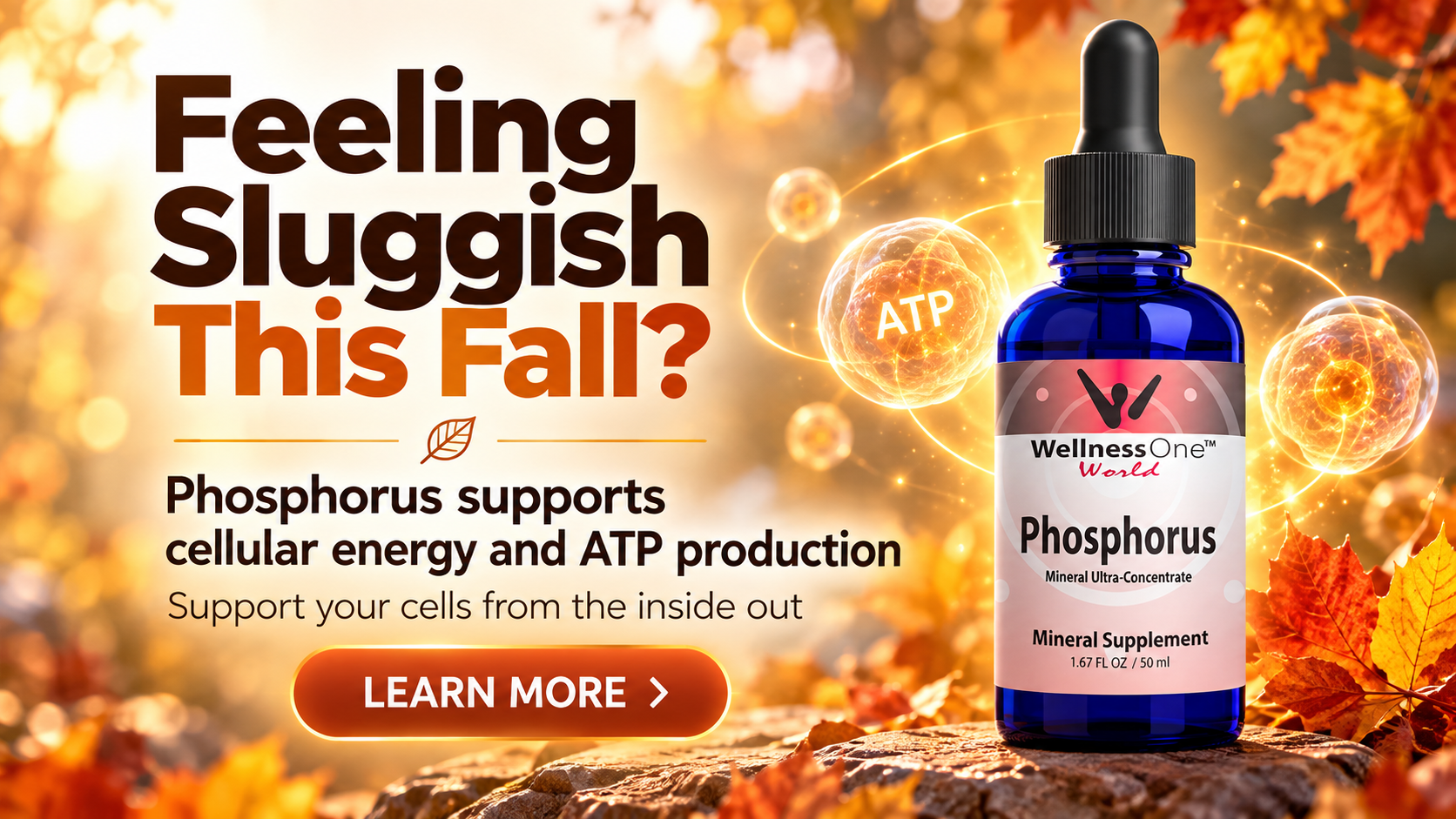
At the center of that process is a molecule called ATP—and one of ATP’s essential components is phosphorus. The National Institutes of Health notes that phosphorus is present in every cell of the body and is needed for energy production and many other important chemical processes.
So if you’re thinking about maintaining steady energy this fall, it may be helpful to look beyond sleep and consider what is happening inside your cells.
Meet ATP: Your Cells’ Energy Currency
You probably don’t think about ATP while walking up the stairs, concentrating at work, preparing dinner, or taking an evening walk.
Your cells do.
ATP stands for adenosine triphosphate. It is often described as the body’s cellular “energy currency” because it provides usable energy for an enormous range of biological processes. ATP helps power muscle contraction, nerve activity, movement of substances across cell membranes, chemical synthesis, and other essential functions.
Think of food as the fuel entering your body’s energy system and ATP as the usable form of energy your cells can actually spend.
Your body can obtain energy from carbohydrates, fats, and proteins, but cells must capture and convert that energy into forms they can use. ATP plays a central role in that conversion.
And there’s an important clue right in its name: adenosine tri-phosphate.
ATP contains three phosphate groups. Those phosphate groups are central to the way ATP stores and transfers usable chemical energy inside cells.
That brings us to a mineral that doesn’t receive nearly as much attention in everyday conversations about energy: phosphorus.
Phosphorus Is About More Than Bones
If you’ve heard of phosphorus before, you may associate it with bone health. That’s understandable because most of the body’s phosphorus is stored in bones and teeth.
But phosphorus isn’t simply a structural mineral.
The remainder is found throughout the body’s blood and soft tissues, where phosphorus participates in numerous cellular processes. It is a component of DNA and RNA, phospholipids that help form cell membranes, and ATP, the molecule central to cellular energy transfer.
In other words, phosphorus isn’t sitting on the sidelines while your body creates energy. It is built into the cellular machinery that makes energy use possible.
This is an important distinction when thinking about nutrition.
We often talk about “energy foods” as if certain foods simply give us energy. What actually happens is far more interesting. Nutrients from food enter a complex network of chemical reactions. Cells capture energy from those nutrients, transform it, and package much of it into ATP.
Phosphate participates throughout this process.
How Your Cells Turn Food Into Usable Energy
Imagine eating breakfast.
Your meal may contain carbohydrates, fat, protein, or some combination of all three. Your digestive system breaks those foods down into smaller components that can be absorbed and used.
Glucose is one familiar example.
Cells can break down glucose through a series of reactions beginning with glycolysis. Under aerobic conditions, additional reactions involving the mitochondria allow cells to capture much more of the energy originally stored in that glucose.
Mitochondria are often casually called the “powerhouses” of cells, and there’s a good reason for that description. Much of the ATP produced during cellular respiration is generated through processes associated with mitochondria.
Phosphate is part of the process that allows ADP—adenosine diphosphate—to become ATP.
You can picture the ATP-ADP system somewhat like a rechargeable battery.
ATP contains three phosphate groups. When ATP is hydrolyzed to ADP and inorganic phosphate, free energy becomes available to help drive cellular work. Cells can then regenerate ATP from ADP as part of ongoing energy metabolism.
This cycle is happening continuously.
Your cells don’t simply make a large supply of ATP in the morning and hope it lasts until bedtime. ATP is constantly being produced, used, and regenerated as your body responds to changing demands.
Where Does All That Cellular Energy Go?
It is easy to think of “energy” only in terms of whether you feel awake or tired.
At the cellular level, energy has a much broader meaning.
Your muscles need ATP to contract. Your nervous system requires energy to maintain electrical gradients and transmit signals. Cells need energy to build molecules, transport substances, maintain their internal environment, and carry out normal repair and maintenance.
Even while you’re sitting quietly, your cells are busy.
Your heart is beating. Your lungs are working. Your brain is processing information. Cells are moving ions across membranes, building proteins, maintaining tissues, and performing thousands of chemical reactions.
ATP helps make that work possible.
That’s why cellular energy is different from simply feeling “energized.” A cup of coffee may temporarily make you feel more alert, for example, but alertness isn’t the same thing as the biochemical production and use of energy inside your cells.
Supporting energy starts with supporting the basic nutritional processes your body relies upon every day.
Why Fall Can Make Sluggishness More Noticeable
Seasonal transitions can change your routines in surprisingly subtle ways.
As fall arrives, daylight decreases. You may spend less time outside. Work and school schedules can become more demanding. Exercise habits may change. Meals can become less consistent as calendars fill up.
Sleep schedules can shift as well.
We’ve previously discussed how seasonal changes can influence energy through changes in circadian rhythms, activity, hydration, and nutrition.
That doesn’t mean a lack of cellular energy is automatically the reason you feel tired in fall. Fatigue can have many causes, ranging from inadequate sleep and stress to medical conditions and nutrient deficiencies.
But the seasonal change can be a useful reminder that maintaining energy involves several systems working together.
Good sleep gives your body time to recover.
Food supplies fuel and nutrients.
Physical activity challenges muscles and influences metabolism.
And minerals—including phosphorus—participate in the biochemical reactions that allow cells to function.
Energy isn’t controlled by one habit or one nutrient. It is the result of a coordinated system.
Are You Getting Enough Phosphorus?
Here’s where the conversation requires some perspective.
Although phosphorus is essential, true dietary phosphorus deficiency is uncommon in the United States. According to the National Institutes of Health, most Americans obtain more phosphorus than they need from food. For adults age 19 and older, the recommended dietary allowance is 700 milligrams per day.
Phosphorus occurs naturally in many familiar foods.
Dairy products such as milk, yogurt, and cheese provide phosphorus, as do meat, poultry, fish, and eggs. Plant sources include legumes, nuts, seeds, whole grains, potatoes, and other foods.
This makes phosphorus relatively accessible in a varied diet.
Phosphorus is also present as phosphate additives in many processed foods. That’s an important reason why “more” isn’t necessarily better. The goal shouldn’t be to consume as much phosphorus as possible. It should be to obtain an appropriate amount as part of an overall balanced diet.
For most healthy adults, eating a varied diet containing nutrient-dense foods will provide plenty.
Why You Shouldn’t Chase Energy With One Nutrient
When you’re tired, it’s tempting to search for one missing piece.
Maybe it’s a vitamin.
Maybe it’s a mineral.
Maybe it’s sleep.
Human metabolism doesn’t work quite that simply.
Phosphorus illustrates this perfectly. It is essential to ATP, but phosphorus doesn’t independently “give” your body energy. Your cells require carbohydrates, fats and proteins as fuel, along with vitamins, minerals, oxygen, enzymes, and functioning metabolic pathways to convert that fuel into usable cellular energy.
Think of it like an engine.
Having enough oil doesn’t replace gasoline. Gasoline doesn’t replace oxygen. And having all three doesn’t help much if other parts of the engine aren’t working properly.
Nutrition works in a similarly interconnected way.
Instead of chasing one nutrient whenever your energy drops, focus on creating the conditions your body needs to produce and use energy normally.
Build a Better Fall Energy Routine
Start with the basics.
Protect your sleep schedule as daylight hours change. Going to bed and waking at relatively consistent times can make the seasonal transition easier on your routine.
Build meals around whole and minimally processed foods whenever possible. Protein foods, dairy, legumes, whole grains, nuts, seeds, and vegetables can provide phosphorus along with many other nutrients your body needs.
Keep moving, too. You don’t need an intense workout every day. Walking, strength training, stretching, and other forms of regular movement can help keep your body active as cooler weather makes it tempting to become more sedentary.
Hydration shouldn’t disappear from your priorities simply because summer is over, either. Your body still requires adequate fluid throughout the fall and winter.
Most importantly, think about energy as something you support consistently rather than something you fix when you finally feel exhausted.
When Sluggishness Deserves a Closer Look
Occasional low-energy days happen to everyone.
Persistent fatigue is different.
If you’re consistently exhausted despite adequate sleep, nutrition, hydration, and recovery, don’t automatically assume you simply need another nutrient or more caffeine.
Fatigue can be associated with many different factors and health conditions. Phosphorus deficiency itself is rare, and low phosphorus levels can occur in connection with severe malnutrition, certain medical conditions, or medications rather than simply an ordinary imperfect diet.
Ongoing or unexplained fatigue is worth discussing with a healthcare professional, particularly if it is severe or accompanied by other symptoms.
Your Fall Energy Reset Starts at the Cellular Level
Fall often encourages us to reset our routines.
We reorganize schedules, settle back into school and work, prepare our homes for colder weather, and start thinking about the busy holiday season ahead.
Your wellness routine deserves the same attention.
Sleep absolutely matters. But feeling your best isn’t only about spending another hour under the covers. Your body also depends on an extraordinary energy system operating inside trillions of cells.
ATP sits at the center of that system, helping cells transfer energy to the processes that keep you moving, thinking, repairing, and functioning. And phosphorus is a fundamental part of ATP as well as cell membranes, DNA, RNA, bones, and many other structures and processes.
So when you’re thinking about energy this fall, broaden the conversation.
Get consistent sleep. Eat nourishing foods. Stay hydrated. Keep moving. Give yourself adequate recovery. And remember that the minerals in your diet aren’t simply numbers on a nutrition label—they become part of the microscopic processes happening inside your body every second.
Your energy doesn’t begin with your morning coffee.
It begins inside your cells.
References
- National Institutes of Health, Office of Dietary Supplements. Phosphorus Fact Sheet for Consumers.
- National Institutes of Health, Office of Dietary Supplements. Phosphorus Fact Sheet for Health Professionals.
- National Library of Medicine, NCBI Bookshelf. The Cell: A Molecular Approach — Metabolic Energy.
- National Library of Medicine, NCBI Bookshelf. Molecular Biology of the Cell — How Cells Obtain Energy from Food.
- National Library of Medicine, NCBI Bookshelf. Physiology, Adenosine Triphosphate.
- National Institute of General Medical Sciences. Science Snippet: ATP’s Amazing Power.
- National Institute of General Medical Sciences. Phosphorus: Glowing, Flammable, and Essential to Our Cells.
- Phosphate Metabolism in Health and Disease. Current Osteoporosis Reports.