
How to Choose a Systemic Enzyme Supplement: 6 Things to Look For
You’ve learned about the differences between digestive and systemic enzymes. You’ve explored why scientists are studying proteolytic enzymes such as nattokinase, bromelain, and other specialized proteases.
But understanding the science raises another important question:
How do you choose a systemic enzyme supplement when so many formulas claim to offer something different?
Walk through the supplement aisle or browse online, and you’ll find products featuring everything from single enzymes to complex combinations of ingredients. Some emphasize digestion, while others are marketed for use beyond the digestive process.
The challenge is knowing what those differences actually mean.
Before choosing a formula, here are six important things worth understanding.
1. Look at the Enzymes, Not Just the Product Name
A supplement labeled “enzyme complex” doesn’t necessarily tell you much about what’s inside.
Different enzymes have different functions, and the specific ingredients matter more than the marketing language on the front of the bottle.
For example:
-
Protease: A general term for enzymes that break down proteins.
-
Bromelain: A group of proteolytic enzymes derived from pineapple.
-
Papain: A protein-breaking enzyme obtained from papaya.
-
Nattokinase: An enzyme associated with fermented soybeans that has been studied for its fibrin-degrading activity under laboratory conditions.
-
Seaprose S: A specialized proteolytic enzyme with its own biochemical characteristics and research history.
Although these ingredients are sometimes grouped together as systemic enzymes, they aren’t interchangeable.
Research involving one enzyme doesn’t automatically establish the effects of another.
What to look for: A clearly identified list of enzymes rather than vague descriptions such as “advanced enzyme blend.”
2. Understand Enzyme Activity: Why Milligrams Aren’t the Whole Story
When comparing vitamins and minerals, consumers often look at the number of milligrams listed on the label.
Enzymes are different.
An enzyme’s biological activity depends on more than its weight. That’s why manufacturers may express enzyme activity using specialized measurement units.
You might see:
| Enzyme | Example activity measurement |
|---|---|
| Protease | HUT |
| Bromelain | GDU |
| Nattokinase | FU |
| Papain | Various activity units depending on the test method |
These units reflect activity measured under specific laboratory conditions.
For example, FU is commonly used to describe nattokinase’s fibrinolytic activity. HUT is one method of measuring certain protease activities.
However, different enzyme units cannot simply be added together or compared as though they measure the same thing.
A formula displaying an impressive-looking number isn’t necessarily better than another product.
What to look for: Transparent activity information, clearly identified ingredients, and a manufacturer that can explain the measurements used.
3. Consider Single-Enzyme Versus Multi-Enzyme Formulas
Some supplements contain one primary enzyme. Others combine several enzymes into a single product.
A single-enzyme formula may appeal to someone interested in a specific ingredient and its research.
A multi-enzyme formula brings together enzymes with different biochemical activities.
For example, a product might combine protease, bromelain, papain, nattokinase, and other specialized ingredients.
But more ingredients don’t automatically mean better results.
Each enzyme may have a different research background, and the benefits observed in studies of individual ingredients cannot automatically be attributed to a finished combination formula.
When evaluating a multi-enzyme product, consider whether the ingredients are clearly identified and whether the manufacturer provides meaningful information about the formulation.
What to look for: A formula with understandable ingredients, transparent labeling, and claims that reflect the available evidence.
4. Pay Attention to When and How the Supplement Is Taken
One of the most noticeable differences between digestive and systemic enzyme supplements is their recommended timing.
Digestive enzyme products are generally intended to be taken with food, where they can participate in breaking down dietary nutrients.
Supplements marketed for systemic use are often directed to be taken between meals or on an empty stomach.
The reasoning behind these directions relates to the product’s intended use, but timing alone doesn’t prove that enzymes enter the bloodstream intact or produce effects outside the digestive system.
Different products may also recommend different serving sizes.
For this reason, it’s important to follow the directions provided for the specific formula rather than assuming all enzyme supplements should be used the same way.
What to look for: Clear serving instructions, recommended timing, and an explanation of the product’s intended use.
5. Evaluate Quality, Transparency, and Safety
A supplement’s ingredient list is important, but so is the company behind it.
Before purchasing, consider whether the manufacturer provides clear labeling, contact information, appropriate quality practices, and reasonable explanations of its product claims.
Be cautious of products promising dramatic results or presenting preliminary research as settled medical science.
Safety deserves particular attention.
Certain proteolytic enzymes, including nattokinase and bromelain, may interact with medications or be unsuitable for some individuals.
People taking anticoagulant or antiplatelet medications, those with bleeding disorders, and individuals preparing for surgery should consult a healthcare professional before considering these supplements.
Allergies and other medical considerations may also influence whether a particular ingredient is appropriate.
What to look for: Clear safety information, responsible marketing, and a manufacturer willing to answer questions about its products.
6. Separate Scientific Research From Marketing Claims
This may be the most important consideration of all.
Research into proteolytic enzymes is interesting, particularly studies involving nattokinase, fibrin, and biological processes associated with coagulation and fibrinolysis.
But scientific evidence comes in different forms.
A laboratory experiment might show that an enzyme breaks down a particular protein. A small human study might report changes in certain biological markers.
Neither finding automatically proves that a commercially available supplement prevents disease or produces meaningful long-term health benefits.
When examining research, ask:
-
Was the study conducted in a laboratory, in animals, or in humans?
-
How many participants were involved?
-
What dose and formulation were studied?
-
Were researchers measuring biological markers or actual health outcomes?
-
Was the finished supplement tested, or only an individual ingredient?
These questions can help you recognize the difference between scientific possibilities and established findings.
What to look for: Companies that explain what research shows without exaggerating what has been proven.
Putting It All Together: Making an Informed Decision
Choosing a systemic enzyme supplement shouldn’t come down to the biggest number on the label, the longest ingredient list, or the boldest advertising claim.
A better approach is to understand the formula, examine its intended use, consider safety, and evaluate the research behind its ingredients.
The six factors we’ve discussed give you a practical starting point for comparing products.
Now let’s look at an example of how these considerations apply to a multi-ingredient enzyme formula.
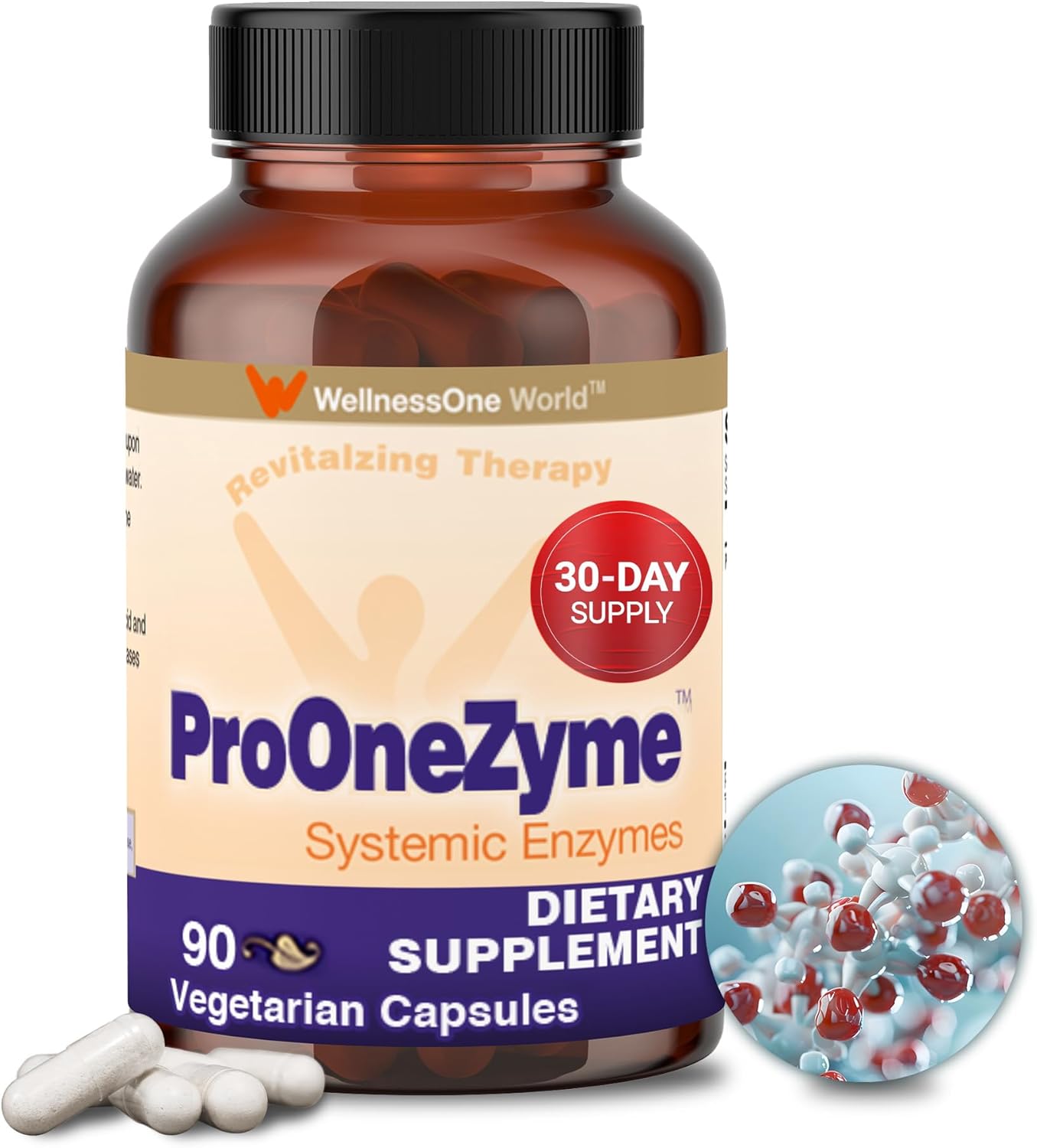
Meet WellnessOne ProOneZyme
WellnessOne ProOneZyme is a multi-ingredient enzyme supplement from Procelle, the company behind Great Wellness Reset.
Its formula includes:
-
Protease
-
Peptidase
-
Papain
-
Bromelain
-
Nattokinase
-
Seaprose S
-
Catalase
-
Rutin
ProOneZyme contains 90 vegetarian capsules, with a serving size of three capsules.
It is formulated for systemic enzyme supplementation, with directions for use away from meals.
Like other multi-ingredient supplements, ProOneZyme should be evaluated based on its actual ingredient information, directions, quality practices, safety considerations, and available evidence—not on assumptions about the combined effects of its ingredients.
If you’re interested in learning more, the next step is to review the complete formula and decide whether it fits your needs.
Ready to Explore ProOneZyme?
You’ve learned what makes systemic enzyme formulas different and which details matter when comparing supplements.
Now you can take a closer look at WellnessOne ProOneZyme, including its ingredients, recommended use, and purchasing options.
Educational information only. This article is not medical advice. Dietary supplements are not intended to diagnose, treat, cure, or prevent disease. Consult a qualified healthcare professional before starting a supplement, particularly if you take medications or have a medical condition.