There is a point in adulthood when you begin to notice that recovery doesn’t happen quite as quickly as it used to.
Maybe a long day working in the yard leaves you sore for two days instead of one. A hard workout that once barely slowed you down suddenly requires a little more recovery time. Even minor cuts, scrapes, or everyday aches may seem to hang around longer than you remember.
For many people, these changes become more noticeable sometime after age 40.
That doesn’t mean your body suddenly becomes old or incapable. In fact, adults can remain strong, active, and resilient for decades. What changes is the importance of supporting the repair processes your body performs every day.
Your muscles, skin, connective tissues, bones, and immune system are constantly maintaining and rebuilding themselves. As the years pass, some of those processes gradually become less efficient, making sleep, nutrition, movement, hydration, and recovery increasingly important.
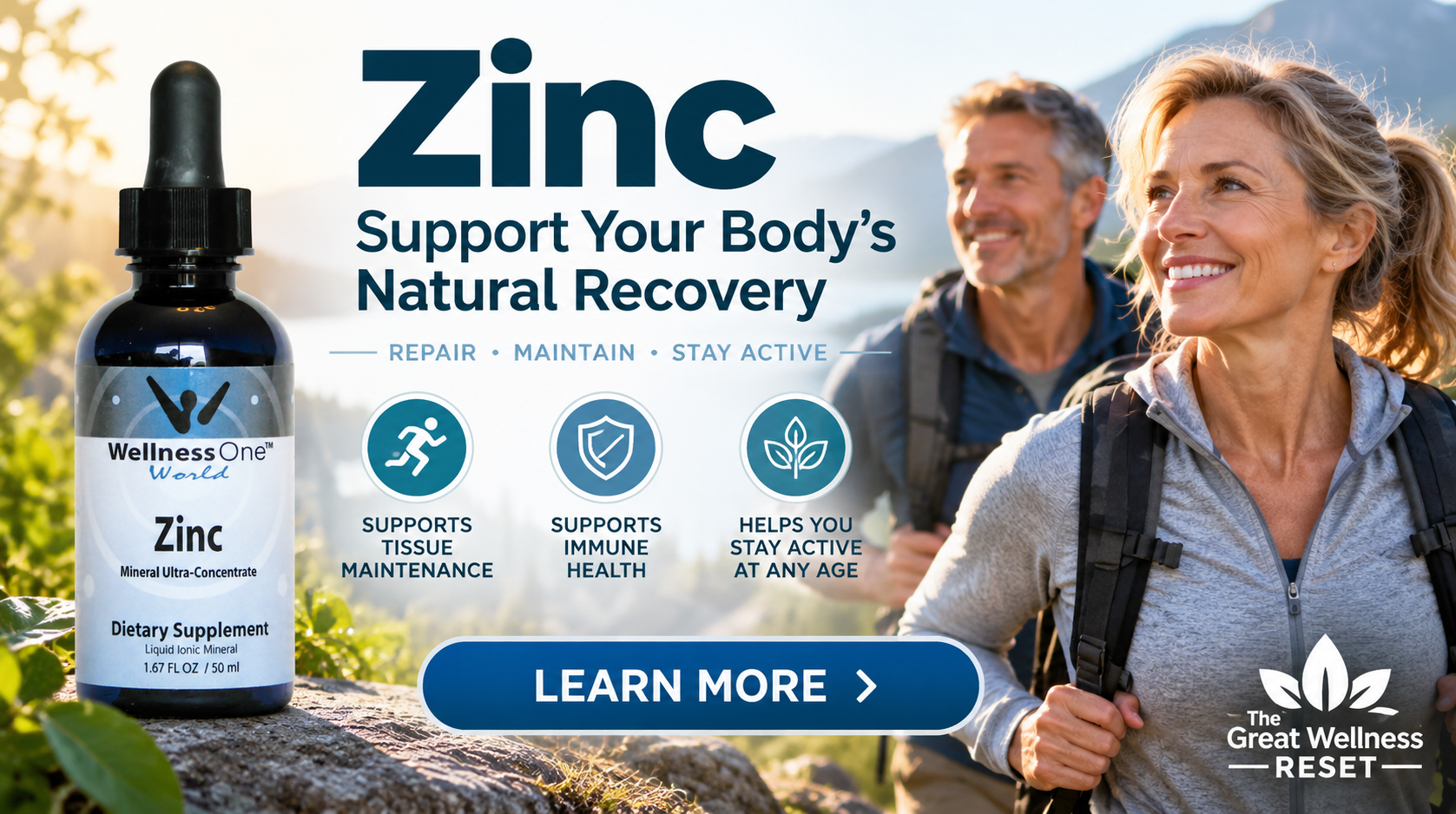
One nutrient involved in many of these processes is zinc.
Zinc is often associated with immune health, but its role extends much further. It is involved in protein production, DNA synthesis, cell division, wound healing, and many of the cellular activities that allow tissues to maintain and repair themselves.
Understanding recovery after 40 is therefore less about accepting decline and more about learning how to give your body the resources it needs to continue repairing, adapting, and performing well.
Recovery Is Happening All the Time
When most people hear the word “recovery,” they think about resting after exercise.
But recovery is happening throughout your body every day.
Your skin continually replaces old cells. Muscle tissue adapts after physical activity. Connective tissues respond to everyday wear and tear. Your immune system identifies damaged cells and coordinates repair. Even the tissues lining your digestive system are constantly being renewed.
This work requires energy and raw materials.
Protein provides amino acids that help build and maintain tissue. Vitamins and minerals support the enzymes that manage thousands of chemical reactions. Sleep helps regulate hormones and provides the body with an opportunity to shift resources toward repair and restoration.
Zinc plays a particularly interesting role because it participates in hundreds of enzyme systems and contributes to protein synthesis, DNA synthesis, cellular signaling, and cell division.
Those functions matter because tissue maintenance depends on cells being able to communicate, reproduce, build proteins, and respond appropriately when damage occurs.
Recovery is therefore not simply something that happens after an injury. It is part of the everyday maintenance program that keeps the body functioning.
Why Recovery Can Feel Different After 40
Aging is gradual, and there is no biological switch that flips on your 40th birthday.
Still, middle age is often when people begin noticing the cumulative effects of changes that have been developing slowly for years.
Muscle mass and physical performance can decline with aging, particularly when activity levels decrease. The National Institute on Aging notes that maintaining physical activity and muscle-strengthening exercise can help preserve muscle function and independence as people get older.
At the same time, tissue repair may become somewhat slower with age.
Research examining wound healing has found that aging can influence several stages of the repair process, including inflammatory responses, new tissue formation, collagen-related activity, and blood vessel development. Importantly, aging does not mean the body loses its ability to heal. Rather, some repair processes can simply take longer.
That difference can become noticeable in everyday life.
You may need an extra day between demanding workouts. A physically intense weekend project may leave you more fatigued than it did at 25. Staying up late may affect you more the following day.
These experiences are signals that recovery deserves more attention—not necessarily that you should become less active.
Muscle Maintenance Becomes Increasingly Valuable
Maintaining muscle is one of the most important parts of healthy aging.
Muscle helps you do much more than lift weights. It allows you to climb stairs, carry groceries, get out of a chair, maintain balance, protect joints, and remain independent.
The National Institute on Aging emphasizes that muscle-strengthening activities can help slow age-related loss of muscle mass and strength. Resistance training can also improve physical function and make everyday activities easier.
But exercise is only half of the equation.
Training creates the stimulus. Recovery allows adaptation.
When you challenge your muscles, microscopic changes occur within the tissue. Your body then uses nutrients and cellular signaling mechanisms to repair and adapt that tissue.
Protein is obviously important in this process, but minerals also participate behind the scenes.
Zinc is required for protein synthesis and cell division, which are fundamental processes involved in maintaining body tissues.
This doesn’t mean taking more zinc automatically creates more muscle. It means maintaining adequate zinc status is one part of ensuring that the normal biological machinery involved in tissue maintenance has what it needs to function.
Your Skin Is Constantly Repairing Itself Too
Muscle gets much of the attention when people talk about recovery, but skin is another highly active tissue.
Every day, your skin deals with sunlight, dryness, friction, environmental exposure, minor cuts, and countless other stresses.
When the skin is damaged, the body launches an organized repair response.
That process involves inflammation, immune activity, cell growth, tissue formation, and remodeling. Researchers studying wound repair have identified zinc as an important micronutrient involved in multiple stages of this process, including cell proliferation and membrane repair.
Zinc’s role in wound healing is one reason adequate nutrition remains important throughout adulthood.
Even when there is no obvious wound, your skin is continuously replacing cells and maintaining its protective barrier.
Healthy aging therefore involves supporting everyday tissue renewal just as much as dealing with major injuries.
Protein Synthesis Is One of the Body’s Repair Tools
Your body is constantly making proteins.
Some become muscle fibers. Others become enzymes, structural components, antibodies, transport proteins, or signaling molecules.
Protein synthesis is essentially part of the construction process that allows your body to maintain itself.
Dietary protein provides the amino acids, while vitamins and minerals help support the biochemical machinery responsible for using them.
Zinc is required for normal protein and DNA synthesis. It also participates in cell division.
That makes zinc relevant to far more than immune support.
Whenever your body needs to create new cells or proteins as part of normal tissue maintenance, adequate nutritional status becomes important.
After 40, when maintaining muscle, skin integrity, and overall physical function becomes increasingly valuable, paying attention to the nutrients involved in these processes makes sense.
Your Immune System Is Part of Recovery
Recovery and immune health are closely connected.
When tissue is damaged, immune cells help coordinate the response.
They participate in inflammation, remove damaged material, communicate with other cells, and help create an environment in which repair can occur.
Zinc supports normal immune function in addition to its roles in wound healing and cellular metabolism.
This is another reason zinc plays multiple roles within healthy aging.
The immune system isn’t simply waiting for a cold or infection. It is constantly monitoring tissues throughout the body and participating in maintenance and repair.
Supporting healthy immune function therefore contributes to the body’s broader ability to maintain itself.
Sleep Becomes Part of Your Healthy Aging Strategy
Many adults treat sleep as something they can borrow from whenever life gets busy.
After 40, that tradeoff often becomes harder to ignore.
Sleep is one of your body’s primary recovery periods. During sleep, your nervous system, hormonal systems, metabolism, and tissues shift into patterns that support restoration.
Someone who exercises regularly but sleeps five hours a night may not recover as effectively as someone who balances training with adequate rest.
The same principle applies outside the gym.
Work stress, family responsibilities, travel, yard work, recreational activities, and poor sleep can all accumulate.
You may not need less activity after 40.
You may simply need more respect for the recovery that makes continued activity possible.
More Exercise Isn’t Always Better
Exercise remains one of the strongest tools available for maintaining physical function as we age.
The goal isn’t to avoid challenging yourself.
It is to challenge yourself intelligently.
The National Institute on Aging recommends a combination of aerobic activity, muscle-strengthening exercise, and balance-focused activity for older adults. It also emphasizes building activity gradually and allowing recovery between strength-training sessions involving the same muscle groups.
That last point becomes increasingly important with age.
If your body is still recovering from yesterday’s activity, another intense session may not provide the benefit you expect.
Sometimes walking, stretching, light activity, or simply taking a day away from strenuous exercise is exactly what allows you to come back stronger.
Healthy aging isn’t a competition to see who can rest the least.
It is about maintaining the ability to move well for decades.
Nutrition Gives Your Body the Raw Materials for Repair
You cannot build or maintain tissue without raw materials.
A balanced diet supplies protein, carbohydrates, healthy fats, vitamins, minerals, and other compounds involved in normal physiological function.
Zinc can be obtained from a variety of foods.
According to the National Institutes of Health Office of Dietary Supplements, good sources include foods such as meat, seafood, dairy products, beans, nuts, and whole grains. Animal-based foods tend to contain zinc that is more readily absorbed, while plant foods can still make meaningful contributions to overall intake.
For adults, the recommended dietary allowance is 11 milligrams per day for men and 8 milligrams per day for women.
More is not necessarily better.
Very high zinc intake over time can interfere with copper absorption and cause other problems, which is why supplementation should complement good nutrition rather than become a race toward the highest dose.
The goal is adequacy.
Your body needs enough zinc to support the biological processes that depend on it.
Recovery Also Means Managing Everyday Stress
Physical stress isn’t the only kind of stress your body experiences.
Mental and emotional stress can affect sleep, appetite, exercise habits, and how well you take care of yourself.
During your 20s, it may have felt possible to work late, sleep poorly, exercise hard, eat inconsistently, and somehow bounce back.
Eventually, those habits become harder to maintain.
This is one of the most useful lessons of healthy aging: recovery is not laziness.
Recovery is maintenance.
Giving yourself enough sleep, eating well, staying hydrated, taking rest days, managing stress, and keeping activity consistent are all investments in maintaining your ability to do the things you enjoy.
Pay Attention to the Signals Your Body Gives You
One advantage of getting older is that you usually become better at recognizing patterns.
You begin to know how your body responds when you haven’t slept enough.
You notice when you’ve pushed training too hard.
You recognize the difference between normal soreness and discomfort that needs attention.
These signals become useful information.
If soreness continues much longer than usual, wounds aren’t healing normally, fatigue becomes persistent, or your physical abilities change unexpectedly, those symptoms shouldn’t automatically be blamed on age.
Medical conditions, medication effects, nutrient deficiencies, sleep disorders, hormonal changes, and many other factors can affect recovery.
Persistent changes are worth discussing with a healthcare professional.
Healthy aging involves listening to your body rather than assuming everything is simply part of getting older.
After 40, Consistency Beats Intensity
Perhaps the biggest shift in thinking after 40 is realizing that health is built through consistency.
You don’t need extreme workouts.
You don’t need an extreme diet.
And you don’t need dozens of supplements.
What your body benefits from most is a reliable foundation.
Move regularly. Challenge your muscles. Eat enough protein. Consume a varied diet that provides essential vitamins and minerals. Maintain adequate zinc intake. Stay hydrated. Sleep consistently. And allow your body time to recover from the things you ask it to do.
These habits may sound simple, but together they support the biological processes responsible for maintaining muscle, skin, connective tissue, immune function, and overall physical ability.
Recovery Helps You Keep Doing What You Love
Aging well isn’t about trying to make your body behave exactly as it did at 25.
It is about understanding what your body needs now.
After 40, recovery gradually becomes a larger part of the equation. Your muscles still adapt. Your skin still renews itself. Your tissues still repair themselves. Your body remains remarkably capable of responding to exercise and maintaining strength.
But those processes depend on adequate rest, movement, nutrition, and essential nutrients.
Zinc is one small but important piece of that system. Its involvement in protein synthesis, DNA production, cell division, immune function, and wound healing illustrates just how connected nutrition is to the body’s everyday maintenance work.
The goal isn’t simply to recover faster.
The goal is to maintain your ability to stay active, strong, independent, and engaged with life for years to come.
When you begin treating recovery as part of healthy living rather than time away from it, getting older starts to look less like slowing down and more like learning how to keep moving forward.
References
- National Institutes of Health, Office of Dietary Supplements. “Zinc — Fact Sheet for Health Professionals.” Updated 2026.
- National Institutes of Health, Office of Dietary Supplements. “Zinc — Fact Sheet for Consumers.”
- National Institute on Aging. “What Do We Know About Healthy Aging?”
- National Institute on Aging. “Health Benefits of Exercise and Physical Activity.”
- National Institute on Aging. “Tips for Getting and Staying Active as You Age.”
- National Institute on Aging. “Three Types of Exercise Can Improve Your Health and Physical Ability.”
- Lansdown, A. B. G., et al. “Zinc in Wound Healing Modulation.” Nutrients, 2018.
- Gould, L., et al. “Chronic Wound Repair and Healing in Older Adults: Current Status and Future Research.” Journal of the American Geriatrics Society, 2015.
- Guo, S., and DiPietro, L. A. “Factors Affecting Wound Healing.” Journal of Dental Research, 2010.