

Introduction: Why “Immune Boosting” Misses the Point
Every year, like clockwork, conversations about “immune boosting” start to trend. Someone around you gets sick. The seasons change. Travel increases. And suddenly the focus shifts to quick fixes—high-dose supplements, last-minute remedies, and emergency routines meant to “kickstart” the immune system.
But here’s the problem with that mindset: the immune system is not a light switch you flip on when you need it.
It’s a living, responsive network that works every single day. It doesn’t need to be boosted into overdrive. In fact, overstimulation can sometimes create more problems than it solves. What the immune system actually needs is balance, communication, and consistent nutritional support.
That’s where zinc enters the conversation—not as a dramatic, last-minute intervention, but as a steady, foundational mineral that supports immune readiness day in and day out.
Immune Readiness Is About Balance
A healthy immune system is not one that reacts aggressively to everything. It’s one that responds appropriately.
Think about what true immune resilience looks like. The body detects a potential threat. It mobilizes immune cells. It signals precisely. It contains the issue. Then, just as importantly, it stands down once the job is done.
That “stand down” phase is critical. Chronic inflammation, prolonged immune activation, and poor signaling often create more long-term stress than the original trigger itself.
Zinc plays an essential role in maintaining this balance. It supports over 300 enzymatic reactions in the body, many of which are directly involved in immune signaling and regulation (Prasad, 2008). Zinc influences the development and function of immune cells such as neutrophils, natural killer cells, and T lymphocytes (Haase & Rink, 2009). It also contributes to the structural integrity of epithelial barriers—your skin and mucosal linings—which serve as the body’s first line of defense (Shankar & Prasad, 1998).
In other words, zinc doesn’t “hype up” the immune system. It helps it function as designed.
And that distinction matters.
Why Waiting Until You’re Sick Is Too Late
One of the most common mistakes in immune support is waiting until symptoms appear before taking action.
By the time you notice fatigue, congestion, or a scratchy throat, your immune system has already been working behind the scenes for days. Immune cells have been activated. Inflammatory pathways have been engaged. Nutrient demand has increased.
If zinc levels are already suboptimal at that point, the system is forced to respond under strain.
Research has consistently shown that zinc deficiency impairs both innate and adaptive immunity (Prasad, 2008). Even mild zinc insufficiency can affect immune cell communication and inflammatory regulation (Haase & Rink, 2009). And zinc deficiency is more common than many people realize, particularly in populations consuming diets high in processed foods or low in zinc-rich sources (Wessells & Brown, 2012).

Daily zinc intake helps maintain baseline immune readiness. It supports ongoing cellular repair. It assists with proper immune cell signaling. It contributes to the maintenance of tissue integrity in areas that are constantly exposed to the external environment, such as the respiratory and gastrointestinal tracts.
This is why consistency matters more than dosage spikes.
Large, occasional doses taken during times of stress cannot replace months of suboptimal intake. The immune system depends on steady availability of micronutrients to perform its complex tasks effectively.
Immune resilience is built slowly, not rushed at the last minute.
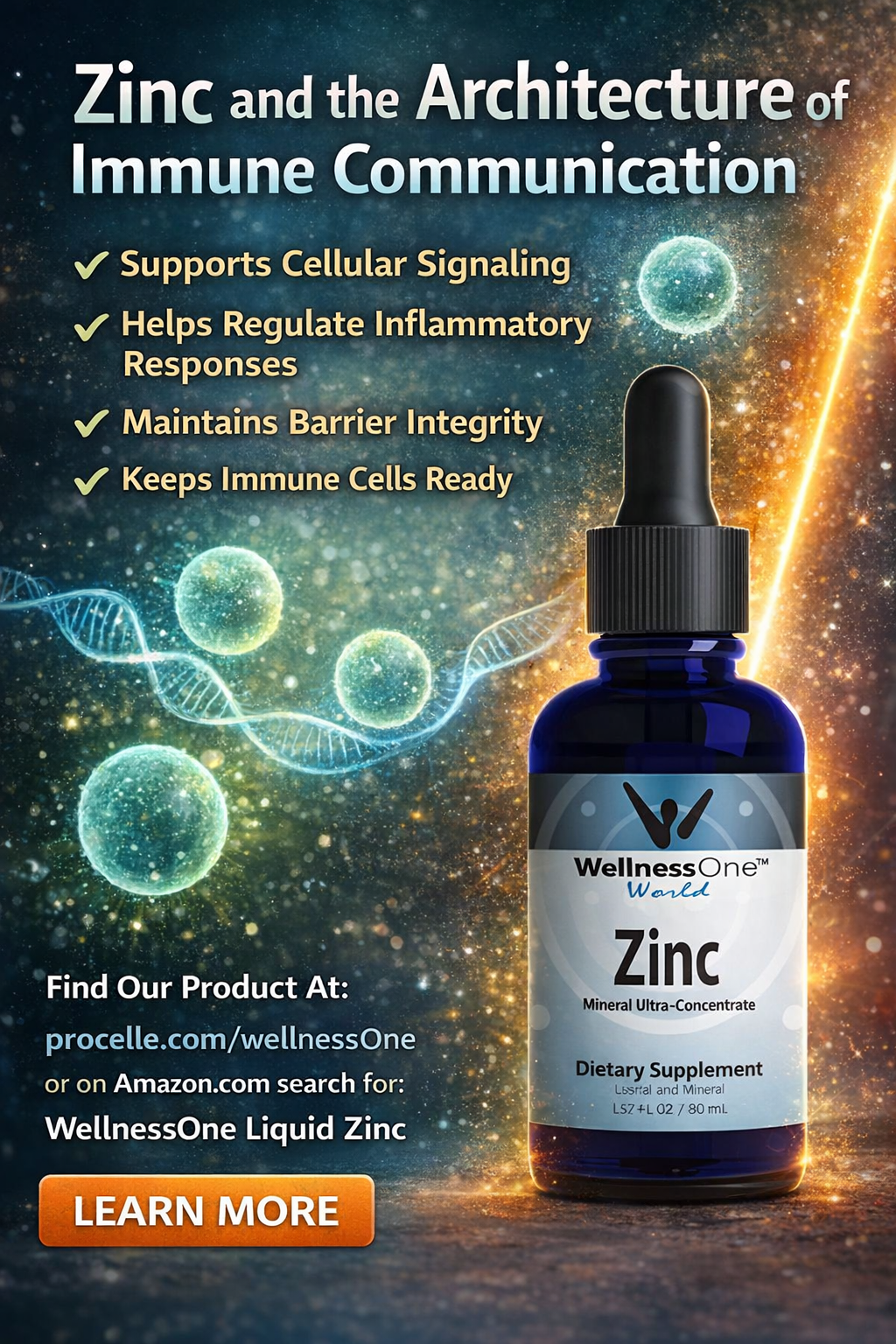
Zinc and the Architecture of Immune Communication
To understand why daily zinc is so important, it helps to think of the immune system as a communication network.
Cells are constantly sending and receiving signals. Cytokines coordinate responses. Regulatory pathways determine whether to escalate or calm inflammation. Barrier tissues signal when they are compromised.
Zinc acts as a signaling molecule itself and influences gene expression related to immune function (Haase & Rink, 2009). It helps regulate inflammatory pathways and supports the production and activity of proteins involved in immune defense (Prasad, 2008).
Without adequate zinc, communication becomes less efficient. The response may be delayed, exaggerated, or poorly resolved.
This isn’t about dramatic deficiency symptoms. It’s about subtle inefficiencies that accumulate over time.
Daily nutritional sufficiency supports smoother communication, more efficient resolution, and less collateral stress.
Seasonal Immune Stress Is About Transitions
When people think of immune stress, they often think of winter. But spring and seasonal transitions introduce their own unique challenges.
Pollen counts rise. Allergen exposure increases. Schedules shift. Travel resumes. Outdoor exposure changes. Sleep patterns fluctuate.
These transitions require adaptive responses from the immune system. It must distinguish between harmless environmental triggers and true threats. It must regulate inflammatory responses appropriately.
Zinc supports this adaptive capacity. Its role in maintaining epithelial barrier integrity helps protect mucosal surfaces during periods of increased environmental exposure (Shankar & Prasad, 1998). Its influence on inflammatory modulation helps prevent overreaction to benign stimuli (Haase & Rink, 2009).

Rather than reacting only during peak stress moments, daily zinc intake supports smoother transitions throughout the year.
Immune health is not a seasonal strategy. It’s a year-round commitment.
The Hidden Cost of Reactive Supplementation
Reactive supplementation often creates a cycle.
You feel well. You stop taking supportive nutrients. Life gets busy. Diet quality slips. Sleep shortens. Stress increases.
Then symptoms appear, and high-dose supplements are suddenly reintroduced.
This stop-start pattern can undermine long-term consistency.
Nutrients like zinc are not meant to function as emergency levers. They are structural components of daily physiology. The body does not store large reserves of zinc in the same way it stores certain other nutrients (King et al., 2000). That makes consistent intake even more important.
Building daily habits that support immune readiness reduces the need for frantic intervention later.
It’s the difference between maintaining a home’s foundation and waiting until cracks appear in the walls.

Why Compliance Matters More Than Perfection
One of the most overlooked aspects of immune support is compliance.
Even the most scientifically sound strategy fails if it’s not sustainable.
Many people struggle with pill fatigue. Large tablets, multiple capsules, or complicated regimens reduce consistency. And when routines feel burdensome, they are often abandoned.
Liquid supplements offer a practical alternative for some individuals. They remove the discomfort of swallowing large capsules. They can be easier to incorporate into daily habits. For some formulations, liquids may also support efficient absorption due to pre-dissolved delivery (Allen, 2002).
More importantly, liquids can reduce the psychological resistance associated with complex supplement routines.
And consistency is the true driver of long-term benefit.
When daily support feels simple, it becomes sustainable.
The Bigger Picture: Immune Health Is Lifestyle-Driven
Zinc is foundational, but it doesn’t operate in isolation.
Immune readiness also depends on adequate sleep, stress regulation, balanced nutrition, hydration, and physical activity. Micronutrients work within the context of overall physiology.
However, zinc’s role is unique because it touches so many aspects of immune architecture—barrier function, cellular signaling, gene regulation, and inflammatory balance (Prasad, 2008).
Ensuring sufficient zinc intake is one of the most reliable baseline strategies for supporting immune resilience.
It is not flashy. It is not dramatic. But it is effective.
Rethinking “Boosting”
The language of “boosting” implies force.
The language of “supporting” implies stability.
Long-term immune wellness is not about pushing the system harder. It is about equipping it to function efficiently.
Daily zinc intake supports readiness rather than reaction. It contributes to cellular repair before damage accumulates. It reinforces communication before signals become chaotic. It strengthens barriers before they are compromised.
And perhaps most importantly, it reduces the need for emergency thinking.
Conclusion
Long-term immune wellness is not reactive.
It is built through daily, supportive habits that prioritize balance over intensity. It favors steady nourishment over sudden spikes. It respects the immune system’s complexity rather than attempting to override it.
Zinc stands as one of the most reliable foundations in this approach. By supporting immune signaling, barrier integrity, and inflammatory regulation, it helps the body remain prepared—not panicked.
Consistency builds resilience.
And resilience, not reaction, is what truly works long term.
References
Allen, L. V. (2002). Oral liquid dosage forms. International Journal of Pharmaceutical Compounding, 6(5), 362–369.
Haase, H., & Rink, L. (2009). The immune system and the impact of zinc during aging. Immunity & Ageing, 6(9).
King, J. C., Shames, D. M., & Woodhouse, L. R. (2000). Zinc homeostasis in humans. The Journal of Nutrition, 130(5S Suppl), 1360S–1366S.
Prasad, A. S. (2008). Zinc in human health: Effect of zinc on immune cells. Molecular Medicine, 14(5–6), 353–357.
Shankar, A. H., & Prasad, A. S. (1998). Zinc and immune function: The biological basis of altered resistance to infection. The American Journal of Clinical Nutrition, 68(2 Suppl), 447S–463S.
Wessells, K. R., & Brown, K. H. (2012). Estimating the global prevalence of zinc deficiency. PLoS ONE, 7(11), e50568.