
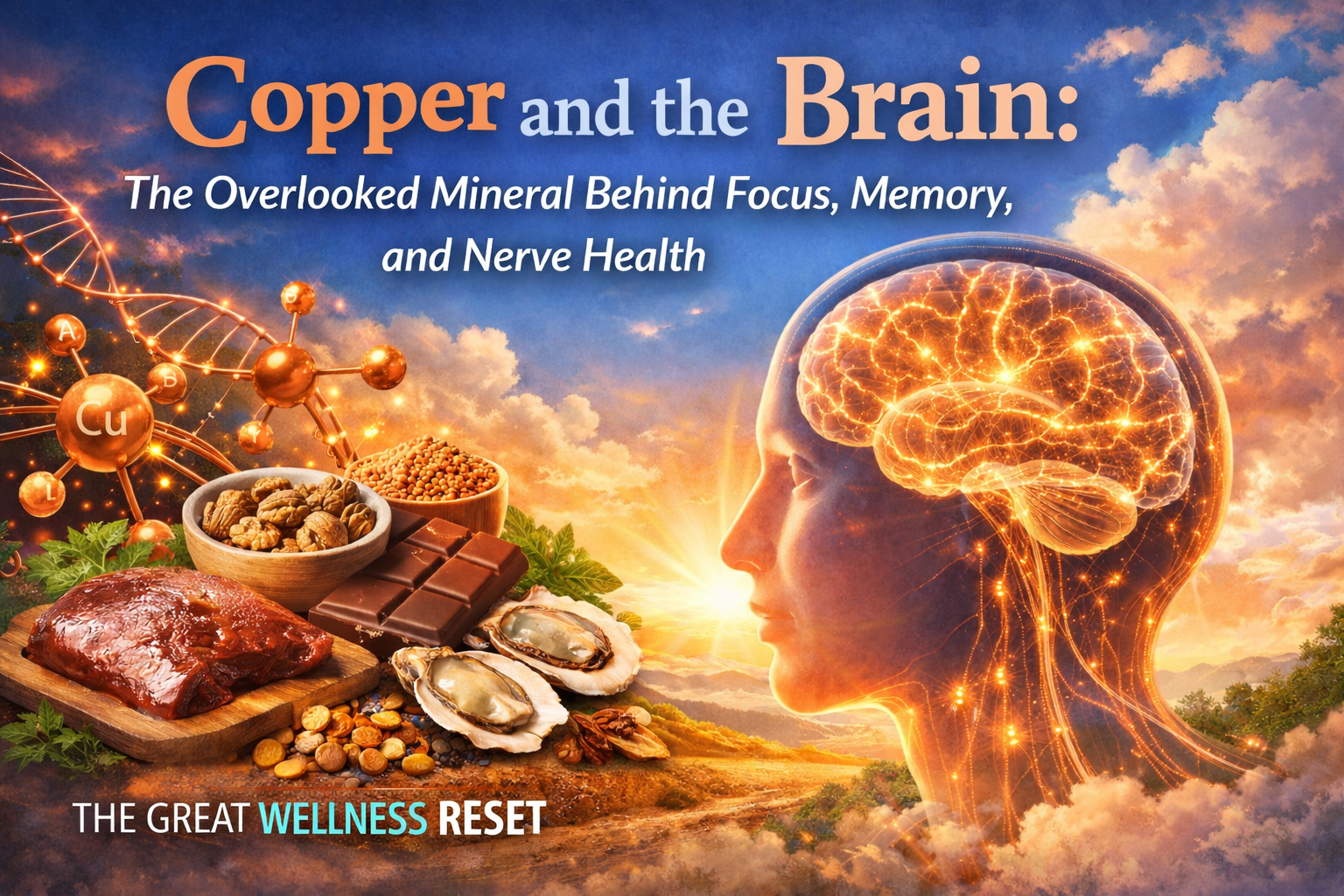
Copper and the Brain: The Overlooked Mineral Behind Focus, Memory, and Nerve Health
When people think about improving brain performance, their minds usually go straight to stimulants. Coffee, energy drinks, nootropics, sleep optimization, and productivity hacks dominate the conversation. Entire industries have grown around the idea that the brain needs to be pushed harder to perform better.
But the brain is not a machine that runs better when it is forced into overdrive.
In reality, the brain functions best when its biological systems are balanced and supported. And one of the most overlooked pieces of that support system is something far simpler than a productivity supplement or cognitive enhancer — a trace mineral called copper.
Copper rarely receives attention in discussions about mental clarity, focus, or memory. Yet it plays a central role in how the brain communicates, how nerves transmit signals, and how mental energy is produced. Rather than stimulating the brain artificially, copper helps maintain the underlying systems that allow the brain to function efficiently.
When copper is lacking, the brain may struggle to keep up — even if everything else appears to be in place.
Understanding copper’s role in brain health reveals an important truth: mental clarity is often less about stimulation and more about biological support.

Copper’s Role in the Nervous System
The nervous system is the body’s communication network. It allows the brain to send messages throughout the body and receive information from the world around us. Every thought, movement, and sensation relies on this system functioning smoothly.
Copper is essential for several enzymes that help keep this system operating correctly.
An enzyme is a protein that speeds up chemical reactions in the body. Many of the reactions that keep the brain functioning would occur far too slowly without enzymes — and many enzymes cannot work without specific minerals acting as helpers. These helper minerals are called cofactors, and copper serves as a cofactor for several critical neurological enzymes.
Copper supports processes involved in neurotransmitter production, nerve insulation, antioxidant defense, and cellular energy production. These may sound like technical terms, but they all contribute to one simple outcome: allowing brain cells to communicate quickly and efficiently.
Neurons — the specialized cells that carry signals in the nervous system — require enormous amounts of energy compared to most other cells in the body. Even though the brain accounts for only about two percent of body weight, it consumes roughly twenty percent of the body’s energy supply.
Copper plays a role in helping neurons generate and use that energy effectively. Without adequate copper, energy production in brain cells may slow down, which can make mental tasks feel more difficult or exhausting.
Neurotransmitters and Mental Clarity
One of copper’s most important contributions to brain function involves neurotransmitters.
Neurotransmitters are chemical messengers that allow nerve cells to communicate with each other. When you focus on a task, remember a piece of information, or feel motivated to act, neurotransmitters are at work.
Copper helps regulate enzymes involved in producing and balancing neurotransmitters such as dopamine and norepinephrine.
Dopamine is often called the motivation molecule. It plays a role in reward, focus, and the ability to stay engaged with a task. Norepinephrine, sometimes known as noradrenaline, helps regulate attention, alertness, and response to stress.
When these neurotransmitters are properly balanced, mental processing tends to feel smooth. Thoughts flow more easily, concentration improves, and the brain can shift between tasks more efficiently.
However, when the enzymes that regulate these chemicals are not functioning well — sometimes due to insufficient mineral cofactors — the balance can shift.
People may experience symptoms that are commonly described as brain fog. Brain fog is not a medical diagnosis but a widely used term for a cluster of cognitive symptoms. These can include difficulty concentrating, slower thinking, forgetfulness, and mental fatigue.
While many factors can contribute to brain fog, mineral balance — including copper levels — is one piece of the puzzle that is often overlooked.
Copper, Myelin, and Nerve Signaling
Another important role of copper involves maintaining something called myelin.
Myelin is a protective coating that surrounds nerve fibers, much like insulation around electrical wires. Its job is to allow electrical signals to travel quickly and efficiently along nerves.
Without adequate myelin, signals can become slower and less precise. This can affect coordination, reaction time, and mental processing.
Copper supports enzymes involved in maintaining healthy myelin. When copper-dependent enzymes are functioning properly, they help sustain the structure of this protective layer around nerves.
If myelin integrity begins to decline, nerve signals may move more slowly. This does not happen overnight, but gradual changes in nerve signaling can contribute to

issues such as reduced concentration, slower cognitive processing, or decreased mental sharpness.
In other words, copper helps maintain the physical infrastructure that allows nerve signals to travel smoothly.
Why Brain Fog Is So Common Today
Many people today report feeling mentally fatigued, scattered, or unable to concentrate for long periods. While lifestyle stress and information overload certainly play a role, there are also biological factors worth considering.
Modern lifestyles can unintentionally reduce copper availability in several ways.
One common factor is excessive zinc supplementation. Zinc is an important mineral for immune function and many other biological processes, but zinc and copper share absorption pathways in the digestive system. When zinc intake becomes very high, it can interfere with copper absorption.
Another issue is the increasing prevalence of highly processed foods. These foods often contain calories but lack the diverse range of trace minerals that were once more common in whole foods grown in mineral-rich soil.
Chronic stress can also increase the body’s demand for minerals. Stress hormones influence many metabolic processes, and prolonged stress may increase the need for nutrients that support neurological and metabolic stability.
Finally, digestive health plays an important role in mineral absorption. If the gut lining is inflamed or imbalanced, the body may struggle to absorb trace minerals effectively, even when they are present in the diet.
The result is that many people experience symptoms like brain fog, fatigue, or poor concentration without realizing that underlying nutrient balance could be contributing.
Instead of addressing these root causes, the typical response is often to reach for stimulants.
Copper vs. Overstimulation
Caffeine, synthetic nootropics, and energy drinks are commonly used to increase mental performance. These substances stimulate the nervous system and temporarily increase alertness.
While they can provide short-term boosts in focus, they do not necessarily support the biological systems responsible for long-term cognitive health.
Copper works very differently.
Rather than stimulating the nervous system, copper supports the natural processes that allow the brain to operate efficiently. It does not force neurotransmitters into overdrive or artificially increase stimulation.
Because of this, copper does not produce the rapid spikes and crashes often associated with stimulants. Instead, it contributes to the stability of the systems that make clear thinking possible in the first place.
In many ways, this reflects a broader shift in how we think about brain health. Instead of pushing the brain harder, the goal becomes supporting the conditions that allow it to function optimally.
The Importance of Mineral Balance
Copper does not work in isolation. Like most nutrients in the body, it functions as part of a larger network of minerals that constantly interact with one another. The nervous system, in particular, depends on this balance. Brain cells, nerve fibers, and neurotransmitters are all influenced by mineral availability, and when one mineral shifts too far out of range, it can affect several others.
This is why nutrition scientists often talk about mineral balance rather than focusing on a single nutrient. Minerals behave less like independent ingredients and more like members of a coordinated system. When the system is balanced, communication between brain cells is smooth, energy production is efficient, and nerve signals travel quickly. When the balance is disrupted, those same processes can begin to slow down.
Copper is one important piece of this system, but it relies on other minerals to help maintain neurological stability.
Magnesium, for example, plays a major role in calming and regulating the nervous system. Magnesium helps control how nerve cells respond to stimulation. Without enough magnesium, nerve cells can become overly excitable, firing signals more frequently than they should. This can contribute to symptoms such as restlessness, irritability, or difficulty relaxing. Magnesium also participates in hundreds of biochemical reactions, including those involved in energy production inside cells. In many ways, magnesium acts as a stabilizer for the nervous system, helping prevent it from becoming overstimulated.
Zinc is another mineral closely tied to copper. Zinc is widely known for its role in immune health, but it is also involved in brain function and enzyme activity throughout the body. Enzymes, which are proteins that speed up chemical reactions, often require minerals like zinc or copper to function properly. Because zinc and copper share similar absorption pathways in the digestive system, they influence each other’s levels in the body. When zinc intake becomes very high for extended periods, it can sometimes reduce copper absorption. This does not mean zinc is harmful—both minerals are essential—but it highlights the importance of maintaining balance rather than focusing heavily on one nutrient while ignoring others.
Potassium plays a different but equally important role. It acts as one of the body’s key electrolytes, which are minerals that carry an electrical charge when dissolved in body fluids. This electrical charge allows cells to send signals to one another. In the nervous system, potassium works alongside sodium to create the tiny electrical impulses that allow nerves to transmit information. Every thought, movement, and reflex depends on these electrical signals. If potassium levels are too low, nerve signaling and muscle function can become less efficient.
Together, minerals like copper, magnesium, zinc, and potassium create an environment where the nervous system can communicate effectively. Copper supports the enzymes that produce neurotransmitters. Magnesium helps regulate nerve excitability and energy metabolism. Zinc contributes to enzyme activity and immune balance. Potassium helps generate the electrical signals that allow nerve cells to communicate.
Because these minerals interact so closely, the body is constantly adjusting how much of each one it absorbs, stores, and uses. This delicate balance is part of the reason why the body requires only small amounts of trace minerals like copper. Even though they are needed in tiny quantities, their influence on biological processes can be significant.
Modern dietary habits can sometimes disrupt this balance. Highly processed foods may provide calories but contain fewer trace minerals than whole foods. Soil depletion in some agricultural areas has also reduced the mineral diversity in certain crops. In addition, many people take single-nutrient supplements that deliver large doses of one mineral without considering how it interacts with others.
When supplementation focuses on extremely high amounts of a single nutrient, it can unintentionally shift the mineral balance. Over time, this may influence how other minerals are absorbed or utilized. For this reason, many nutrition experts emphasize restoring equilibrium rather than chasing extremely high doses.
Equilibrium simply means maintaining a healthy balance where each mineral can perform its role without interfering with the others. When mineral levels are balanced, enzymes function more efficiently, nerve signals travel smoothly, and cellular energy production remains stable.
In practical terms, supporting mineral balance often involves a combination of nutrient-rich foods, adequate hydration, digestive health, and thoughtful supplementation when needed. Instead of trying to override the body’s natural processes, the goal becomes supporting the systems that already exist.
When the nervous system receives the minerals it needs in balanced proportions, the brain can operate with greater stability. Focus becomes easier to sustain, mental fatigue may decrease, and the brain’s communication networks function the way they were designed to.
In this way, mineral balance serves as a quiet but powerful foundation for neurological health.

Why Liquid Copper Matters
The form in which a nutrient is delivered can influence how well the body absorbs and utilizes it.
Liquid mineral supplements often offer certain advantages compared to capsules or tablets. Because the mineral is already dissolved in liquid, the digestive system does not need to break down a pill before absorption can begin. This may allow the body to access the mineral more efficiently.
Liquid forms can also make it easier to adjust and control dosing. Instead of relying on fixed capsule amounts, liquids allow for more flexibility in how much is consumed at a given time.
Another potential benefit involves digestion. Some individuals have lower stomach acid levels, which can make it harder to break down certain solid supplements. Liquid minerals may place less strain on the digestive process, allowing the mineral to be absorbed without as much effort from the body.
Ultimately, the goal of mineral support is not to overwhelm the body with excessive amounts but to provide nutrients in a form that the body can recognize and use effectively. When minerals are delivered in appropriate amounts and absorbed efficiently, they can quietly support the biological systems that contribute to mental clarity, nerve health, and overall neurological balance.
Supporting the Brain by Supporting the Body
It is easy to think of the brain as separate from the rest of the body, but the two are deeply interconnected. Brain function depends on circulation, nutrient delivery, cellular energy production, and the integrity of nerve signaling pathways.
Copper participates in all of these systems.
It helps enzymes regulate neurotransmitters. It supports the insulation of nerve fibers. It contributes to antioxidant defenses that protect brain tissue. And it plays a role in cellular energy production that keeps neurons functioning.
None of these actions create a sudden surge of mental energy the way a stimulant might. Instead, they help maintain the conditions that allow the brain to function smoothly over time.
How to Get Enough Copper
Because copper is a trace mineral, the body only needs small amounts each day. However, “small” does not mean unimportant. Even though the required intake is measured in milligrams, copper participates in many neurological and metabolic processes that influence brain function.
Most adults require roughly 0.9 milligrams of copper per day to maintain normal physiological function. This amount is typically obtainable through a varied diet that includes whole, mineral-rich foods.
Some of the best natural food sources of copper include organ meats such as liver, shellfish like oysters, dark chocolate, nuts, seeds, legumes, and whole grains. Foods such as cashews, sunflower seeds, lentils, chickpeas, and mushrooms also contribute meaningful amounts. These foods provide copper in combination with other minerals and nutrients that support overall metabolic balance.
Plant foods grown in healthy soil can also contain trace minerals like copper, although mineral levels may vary depending on agricultural practices and soil quality. This is one reason why eating a wide variety of whole foods is often recommended. Diversity in the diet increases the likelihood of obtaining the full spectrum of trace nutrients the body relies on.
For individuals who struggle to meet mineral needs through diet alone, some people choose to support intake through supplements. When doing so, moderation is important. Copper works best within a balanced mineral environment, particularly alongside nutrients such as zinc, magnesium, and iron.
Because copper and zinc share absorption pathways, extremely high amounts of zinc supplementation over long periods may reduce copper availability in the body. This does not mean zinc should be avoided—both minerals are essential—but it does highlight the importance of maintaining a healthy balance between them.
Digestive health also plays a role in copper status. Minerals must be absorbed through the small intestine, so conditions that impair digestion or nutrient absorption can sometimes affect trace mineral levels. Supporting gut health, eating a nutrient-dense diet, and avoiding excessive reliance on highly processed foods can all contribute to better mineral availability.
Ultimately, obtaining enough copper is less about chasing large doses and more about consistent nutritional support. A balanced diet that includes a variety of whole foods, combined with thoughtful mineral intake, can help ensure that the brain and nervous system receive the copper they need to function efficiently.
When copper intake is sufficient, it quietly supports the neurological systems responsible for focus, memory, and nerve signaling—often without people realizing the role this small but powerful mineral is playing behind the scenes.
Conclusion
Mental clarity is often framed as a matter of discipline or productivity strategy. But beneath the surface, the brain relies on a complex network of biological processes that require proper nutritional support.
Copper is one of the quiet contributors to that system.
By supporting neurotransmitter balance, nerve insulation, antioxidant protection, and cellular energy production, copper helps maintain the foundation of healthy brain function.
When mineral balance is restored, many people notice that focus and mental clarity improve naturally — not because the brain has been pushed harder, but because the systems that support it are working the way they were designed to.
Sometimes the most powerful support for brain health is not stimulation, but balance.
References
Arredondo, M., & Núñez, M. T. (2005). Iron and copper metabolism. Molecular Aspects of Medicine, 26(4–5), 313–327.
https://doi.org/10.1016/j.mam.2005.07.010
Gaetke, L. M., & Chow, C. K. (2003). Copper toxicity, oxidative stress, and antioxidant nutrients. Toxicology, 189(1–2), 147–163.
https://doi.org/10.1016/S0300-483X(03)00159-8
Prohaska, J. R. (2014). Impact of copper deficiency in humans. Annals of the New York Academy of Sciences, 1314(1), 1–5.
https://doi.org/10.1111/nyas.12310
Scheiber, I. F., Dringen, R., & Mercer, J. F. (2014). Copper: Effects of deficiency and overload. Metallomics, 6(1), 48–54.
https://doi.org/10.1039/C3MT00265J
Lutsenko, S. (2010). Human copper homeostasis: A network of interconnected pathways. Current Opinion in Chemical Biology, 14(2), 211–217.
https://doi.org/10.1016/j.cbpa.2010.01.003
Uriu-Adams, J. Y., & Keen, C. L. (2005). Copper, oxidative stress, and human health. Molecular Aspects of Medicine, 26(4–5), 268–298.
https://doi.org/10.1016/j.mam.2005.07.015
Institute of Medicine. (2001). Dietary Reference Intakes for Vitamin A, Vitamin K, Arsenic, Boron, Chromium, Copper, Iodine, Iron, Manganese, Molybdenum, Nickel, Silicon, Vanadium, and Zinc.
National Academies Press.
https://doi.org/10.17226/10026
Tümer, Z., & Møller, L. B. (2010). Menke’s disease and the role of copper in the nervous system. Journal of Clinical Neuroscience, 17(8), 1035–1041.
https://doi.org/10.1016/j.jocn.2009.10.033