
Built to Move: How Energy, Recovery, and Mineral Balance Support Strength
Movement is something most people take for granted—until it doesn’t feel the same anymore. Whether it shows up as stiffness in the morning, fatigue halfway through the day, or slower recovery after activity, changes in how the body moves are often dismissed as a normal part of aging or a busy lifestyle. But movement isn’t just about muscles. It’s about energy, communication, and how well your body supports itself at the cellular level.
What many people don’t realize is that every step, every lift, and every stretch is powered by a constant cycle happening inside your cells. And at the center of that cycle is energy—specifically a molecule called ATP, which relies heavily on phosphorus to function properly.
When you begin to understand movement this way, it changes the conversation. It’s no longer just about working harder or pushing through fatigue. It’s about supporting the systems that allow your body to move well in the first place.
Movement Is Fueled by Cellular Energy
Every muscle contraction begins with energy. When your muscles contract, ATP is used. When they relax, ATP must be regenerated. This isn’t something that happens occasionally—it happens continuously, whether you’re exercising, walking, or simply maintaining posture.
Phosphorus plays a central role in this process because ATP itself is made up of phosphate groups. Without adequate phosphorus, your body cannot efficiently create or recycle ATP.
This is where many people start to feel the difference. When energy production is less efficient, muscles may still function, but they often feel heavier, slower, and more easily fatigued. Over time, this can turn everyday movement into something that feels like effort rather than something natural.
If you’ve read our article on how cellular energy impacts overall vitality, you’ll see how this same principle extends beyond muscles to nearly every system in the body:
https://greatwellnessreset.com/energy-at-the-cellular-level-how-phosphorus-fuels-metabolism-vitality-and-daily-performance/
Muscle Contraction Is Only Half the Story
Most people associate muscle performance with contraction—lifting, pushing, or pulling. But relaxation is just as important, and it also requires energy.
After a muscle contracts, it must reset before it can contract again. This reset phase depends on ATP availability. Without enough energy, muscles can feel tight, slow to release, or unable to perform repeated movements efficiently.
This is one reason why some people experience stiffness or lingering fatigue even when they haven’t overexerted themselves. It’s not always about doing too much—it can be about not recovering efficiently between movements.
This concept connects closely with what we explored in our article on stress and the nervous system, where physical tension often reflects deeper energy imbalances:
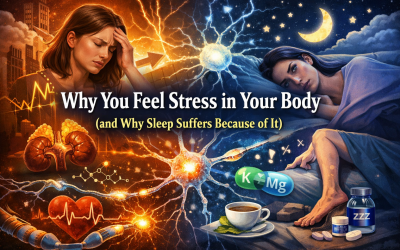
https://greatwellnessreset.com/why-stress-feels-physical-the-mineral-connection-between-your-nervous-system-and-sleep/
Why It Always Seems Worse at Night
During the day, movement masks underlying imbalances.
At night, everything changes.
Your body stops moving. Your nervous system attempts to slow down. Recovery processes begin.
If your body lacks the resources it needs to fully relax, symptoms surface right at that moment.
That’s why many people feel fine during the day but experience discomfort as soon as they lie down.
Nighttime symptoms are not random. They are signals.
Active Lifestyles Increase Energy Demand
The more active you are, the more energy your body needs to sustain movement. This doesn’t just apply to athletes. It applies to anyone who is on their feet all day, lifting, walking, or simply trying to stay consistent with daily exercise.
As activity increases, ATP turnover increases. That means your body must continuously regenerate energy at a higher rate. Phosphorus supports this process by helping maintain ATP availability during sustained activity.
When this system is supported, movement tends to feel smoother and more sustainable. When it’s not, fatigue shows up earlier, endurance drops, and recovery takes longer.
This is why endurance often feels like an energy issue rather than a strength issue. The muscles can perform—but they can’t maintain that performance over time.
Strength Is Built Through Recovery, Not Just Effort
There’s a common belief that strength is built during exercise. In reality, strength is built during recovery.
Every time you move, your body goes through a cycle of energy use, repair, and adaptation. If recovery is efficient, your muscles come back stronger. If recovery is incomplete, the body stays in a cycle of fatigue without progress.
Phosphorus supports this recovery phase by helping replenish ATP and support cellular repair processes.
This is where many people get stuck. They’re putting in the effort, but their body isn’t fully supported in the recovery phase. Over time, this can feel like hitting a plateau, where no matter how much you do, results don’t match the effort.
We explored a similar idea in our article on inflammation and recovery, where the body’s ability to repair plays a central role in long-term performance:
https://greatwellnessreset.com/the-anti-inflammatory-diet-how-food-choices-calm-inflammation-and-support-long-term-health/
Coordination and Movement Quality Start with Communication
Movement isn’t just about muscles—it’s about communication between your brain, nerves, and muscle fibers. Every movement you make is coordinated through signals that tell your muscles when to contract and when to relax.
Phosphorus supports this system by helping maintain energy for nerve signaling and supporting cell membrane function.
When this communication is efficient, movement feels smooth and controlled. When it’s not, movement can feel less coordinated, more strained, or harder to sustain.
This is often why people describe feeling “off” rather than weak. The issue isn’t always strength—it’s how well the body is coordinating movement as a whole.

Endurance Is About Efficiency, Not Force
Endurance isn’t about pushing harder. It’s about how efficiently your body uses and regenerates energy over time.
Phosphorus contributes to endurance by supporting continuous ATP regeneration, allowing muscles to maintain output without rapid depletion.
This is why endurance issues often show up as early fatigue rather than an inability to perform at all. The body can still move—but it can’t sustain that movement for long.
If you’ve experienced this, it’s often a sign that the energy system needs more support, not just more effort.
Recovery Preserves Long-Term Movement
Recovery isn’t just about feeling better after activity. It’s about preserving how your body moves over time.
Without proper recovery, movement patterns can become compensatory. Muscles may tighten, joints may take on extra stress, and overall efficiency can decline. Over time, this can increase the risk of discomfort or injury.
Phosphorus supports recovery by helping restore energy and support cellular repair, allowing the body to return to a balanced state after activity.
This is why consistent support matters more than occasional effort. The body thrives on steady, daily support that allows it to recover fully and maintain performance over time.
Mineral Balance Matters More Than Isolation
While phosphorus plays a key role in energy, it doesn’t work alone. Muscle function depends on a balance of minerals working together.
Calcium helps trigger contraction. Magnesium supports relaxation. Phosphorus provides the energy that powers both.
When these minerals are balanced, movement tends to feel smoother and more efficient. When they’re not, the body may struggle with tension, fatigue, or inconsistent performance.
This is why a holistic approach to mineral support often leads to better results than focusing on a single nutrient in isolation.
Supporting the Body the Way It Was Designed
The human body was built to move. But movement depends on more than just muscles—it depends on energy, communication, and recovery working together seamlessly.
Phosphorus supports the systems that make this possible. It helps fuel the energy cycle, supports recovery, and contributes to the efficiency that allows movement to feel natural rather than forced.
When these systems are supported consistently, the difference is noticeable. Movement feels smoother. Recovery feels quicker. Energy feels more sustainable.
And that’s really the goal—not just to move more, but to move well.
If you’re looking to take a deeper dive into how minerals support your overall wellness, you can explore more insights here:
https://greatwellnessreset.com/
References
National Institutes of Health. “Phosphorus Fact Sheet for Health Professionals.”
https://ods.od.nih.gov/factsheets/Phosphorus-HealthProfessional/
Institute of Medicine. “Dietary Reference Intakes for Calcium and Vitamin D.” National Academies Press.
Berg JM, Tymoczko JL, Gatto GJ. Biochemistry. W.H. Freeman and Company.
Guyton AC, Hall JE. Textbook of Medical Physiology. Elsevier.
Rodwell VW et al. Harper’s Illustrated Biochemistry. McGraw-Hill Education.

0 Comments